
Griffith betrayed the Band of the Hawk during the Eclipse, sacrificing his comrades to ascend as Femto, and he sexually assaulted Casca in front of Guts, leaving lifelong trauma and a curse that follows the survivors.
Drawing on the canon sequence and arc context readers track on ComicK, this guide lays out the key events in a clear timeline, explains Griffith’s motivations without excusing them, and shows how his actions reshape Berserk’s entire world. Keep reading for the full, spoiler-heavy breakdown of what happened and why it matters.
Spoiler note and why this question matters
“What did Griffith do” usually means one of two things:
- You have heard Griffith is one of anime and manga’s most infamous characters and you want the canon explanation.
- You have read or watched part of Berserk and you need clarity on the exact sequence of betrayals, especially the Eclipse.
Either way, the shortest truthful summary is simple: Griffith commits the ultimate betrayal against the people who loved him most, and the consequences permanently reshape the protagonists’ lives and the world itself.
Who is Griffith in Berserk?
Griffith begins as the charismatic leader of the Band of the Hawk, a mercenary company that rises to fame through military success and political influence. He is brilliant, beautiful, and intensely driven by a singular dream: to obtain his own kingdom.
Griffith’s defining trait: ambition as identity
For Griffith, ambition is not merely a goal. It is his sense of self. He believes he was “made” to reach a destiny that justifies every sacrifice that came before. This matters because Berserk does not portray his dream as harmless motivation. It portrays it as a system that consumes people.
Why people follow him
Griffith’s charisma is not just surface-level charm. He offers people meaning.
- He gives outsiders a banner to belong to.
- He provides a vision that makes suffering feel purposeful.
- He creates loyalty by making people feel chosen.
This is why his eventual betrayal hits as hard as it does. The Band of the Hawk is not simply a group of coworkers. For many members, it is the first family they have ever had.
What Griffith did before the Eclipse
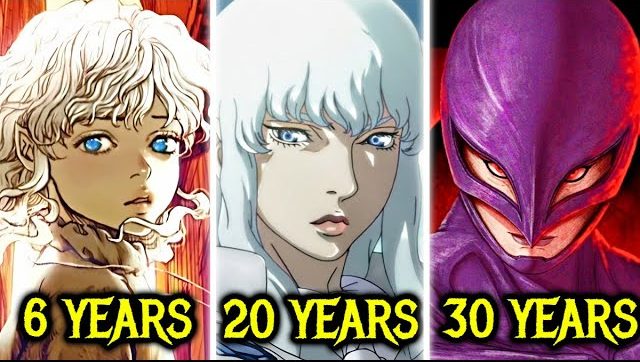
To understand why the Eclipse is so shocking, it helps to see that Griffith’s moral compromises begin earlier. The Eclipse is the climax, not the first warning sign.
He built the Band of the Hawk using charisma and calculated risk
Griffith is an exceptional leader in battle and strategy. He repeatedly chooses high-risk moves that pay off and accelerate the Hawks’ rise. That success makes him look “blessed,” which reinforces the myth that he is destined.
But the moral cost shows up in how he frames people:
- Allies become assets
- Loyalty becomes a currency
- Human lives become the price of the dream
Even when he is kind, there is often an underlying calculation: “Is this moving us toward the kingdom?”
He shaped Guts through recruitment, then struggled to accept Guts as independent
Griffith’s relationship with Guts is central to the entire tragedy.
At first, Griffith treats Guts as the perfect soldier for his dream. Over time, their bond becomes deeper and more personal, but it also becomes unstable because Griffith’s worldview struggles with equality.
The key tension is this: Griffith wants to be admired and followed, but he also craves someone who can truly stand beside him. When Guts begins to become that person, Griffith is drawn in, then threatened.
He made a catastrophic political mistake after Guts left
When Guts leaves the Band of the Hawk, Griffith spirals. He makes a reckless decision that triggers his downfall. This moment is vital because it shows that Griffith’s “control” is not absolute. When his identity is shaken, he becomes impulsive and self-destructive.
That mistake leads to:
- his capture
- his imprisonment
- prolonged torture and mutilation
- the collapse of his standing and the Hawks’ security
This is the moment where the dream starts to slip away, and in Griffith’s mind, a world without the dream is a world where everything he did was meaningless.
He returned physically broken, psychologically desperate
When the Hawks rescue Griffith, he is no longer the shining commander. He is ruined physically and emotionally. The gap between “who he was” and “what he has become” pushes him toward a final choice.
This context matters, not because it excuses him, but because it explains why he is susceptible to the God Hand’s bargain.
The Eclipse: What Griffith did and why it is unforgivable
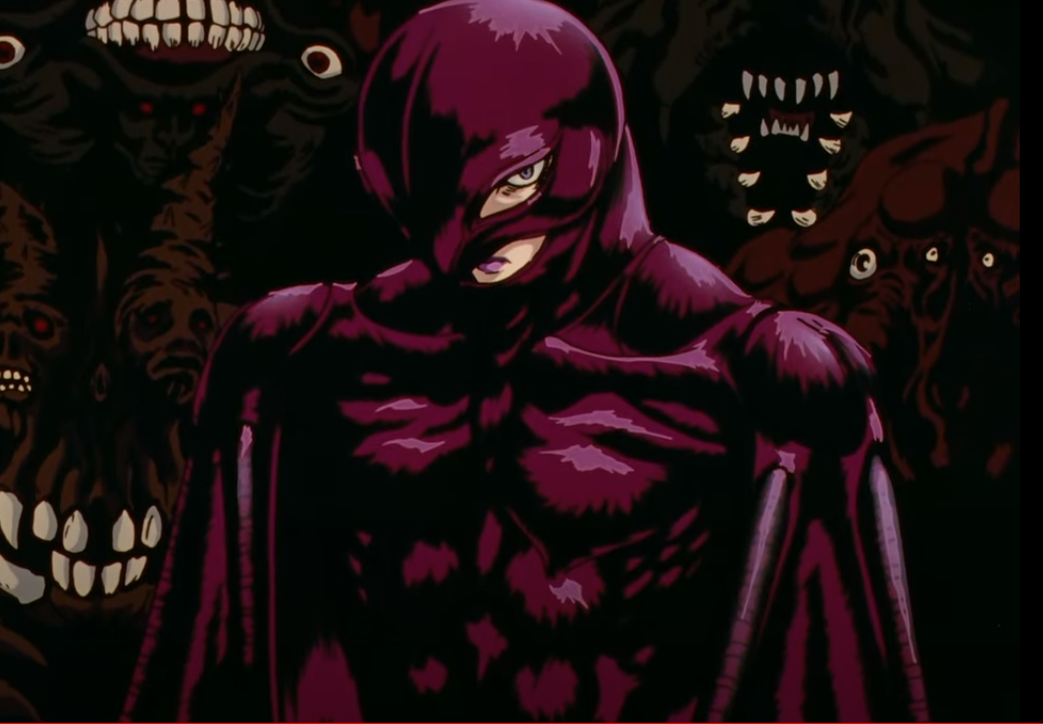
If you only want the direct answer to “what did Griffith do,” this is the core section.
He accepted the God Hand’s offer
During the Eclipse, Griffith is offered a trade: godhood in exchange for sacrifice. The sacrifice is not symbolic. It is literal. He must offer the Band of the Hawk, the people who bled for him, as a mass offering to become something beyond human.
Griffith chooses yes.
He sacrificed the Band of the Hawk
This is the defining betrayal. Griffith allows his entire army, his closest comrades, and the people who loved him to be slaughtered so that he can ascend. The Band of the Hawk is not merely defeated. They are fed into horror.
Why it breaks the reader is not just the death count. It is the emotional logic:
- These people believed in him.
- They rescued him.
- They were willing to rebuild his life.
- He repays that love by converting them into currency.
He branded Guts and Casca for death
Guts and Casca survive, but they are marked. The Brand is not simply a scar. It becomes a lifelong curse that draws monsters and suffering toward them. Even after the Eclipse ends, the consequences do not end.
He sexually assaulted Casca in front of Guts
This is one of the most infamous acts in manga, and it is important to describe it clearly but not graphically: Griffith sexually assaults Casca while forcing Guts to witness it.
This act is commonly viewed as the final proof that Griffith’s betrayal is not only strategic. It is personal, cruel, and designed to destroy what Guts and Casca are to each other.
For many readers, this moment transforms Griffith from “fallen dreamer” into “irredeemable.”
He was reborn as Femto
After choosing sacrifice, Griffith is reborn as Femto, a member of the God Hand. This is not a power-up. It is a metamorphosis into a being aligned with cosmic evil and fate manipulation.
From this point on, Griffith’s actions should be read as the actions of someone who has stepped beyond human morality, while still retaining human ambition.
What Griffith did after the Eclipse
The Eclipse is the emotional center of the question, but Griffith’s post-Eclipse actions are what make the story’s stakes global rather than purely personal.
He continued to manipulate the world from a position of myth
After becoming Femto and returning to the broader world, Griffith’s image evolves into something almost religious. He becomes:
- a symbol people rally behind
- a figure the desperate interpret as a savior
- a leader whose narrative is “hope,” even when the truth underneath is horror
This is one of Berserk’s sharpest ideas: evil can win by presenting itself as salvation.
He formed a new “Band of the Hawk” under different rules
Griffith’s new forces are not the original Hawks. They are structured around his post-human authority and the world’s shifting power balance. The name “Hawk” becomes branding. The loyalty becomes engineered. The dream becomes institutional.
It is not just a comeback story. It is a takeover.
He built a utopia-like kingdom that is morally poisoned
As Griffith rises, he establishes a powerful city-state that appears safe compared to the surrounding chaos. This is where many fans become conflicted: if the world is collapsing into monsters and war, is Griffith’s “order” better?
Berserk pushes you to consider a hard question: what is the value of safety if it is built on manipulation, mass death, and the rule of a being who treats human lives as tools?
He remained a psychological weapon against Guts and Casca
Even when Griffith is not physically present, he functions as a permanent wound in Guts and Casca’s lives.
- For Guts, he is the symbol of betrayal, rage, and the struggle not to become a monster himself.
- For Casca, he is tied to trauma so severe it fractures her ability to live normally for a long time.
This is not a simple “villain stole something” storyline. It is a permanent reshaping of identity.
Why did Griffith do it?
This is where the character becomes controversial in a different way. Many readers agree on what Griffith did. They argue about why.
His dream was always bigger than his relationships
Griffith’s tragedy is that he genuinely cares about people in his orbit, but he cares about the dream more. In his worldview, the dream is sacred. Anything that threatens it becomes intolerable.
If you want the cleanest interpretation: Griffith treats the kingdom as proof that his life has meaning. Without it, everything he sacrificed becomes unbearable.
He could not process losing control of Guts
Guts leaving the Hawks fractures Griffith’s self-image. It proves that someone can reject his orbit and still be whole. For a leader whose identity is built on being followed, that rejection is existential.
This is why the Eclipse’s cruelty is often read as partially targeted at Guts. It is not only about ascension. It is about domination.
Despair made him vulnerable, but the choice was still his
A common mistake is to say “the God Hand made him do it.” They tempted him, yes. They shaped the conditions, yes. But Berserk presents the sacrifice as a choice that reveals what was already inside him.
A useful way to frame it:
- Despair explains why the offer worked.
- Ambition explains why he accepted.
- Morality is judged by the fact that he had another option: not becoming a god at the cost of his comrades.
Was Griffith always evil?
This is one of the biggest debates in the fandom.
The “Griffith was always a monster” view
This view argues that Griffith’s earlier charm was a mask, and the Eclipse merely revealed his true nature. People in this camp often point to:
- his willingness to use people as steps
- his intolerance of disobedience
- the way he frames comradeship as ownership
- the pattern of rationalizing harm as necessary
The “Griffith was human until he broke” view
This view argues that Griffith had genuine human bonds and even moments of compassion, but torture, loss, and despair pushed him into a catastrophic decision. In this reading, the tragedy is that Griffith might have been capable of another life if he could have accepted failure and rebuilt.
The most balanced interpretation
From a story-analysis standpoint, the strongest reading is often this:
- Griffith was not “pure evil” at the start.
- Griffith was always dangerous because his dream required people to be expendable.
- The Eclipse is the moment where he stops pretending those people are not expendable.
In other words, the seed existed early. The Eclipse is the full harvest.
How Griffith’s actions changed Guts, Casca, and the entire story
If you are asking “what did Griffith do,” you are also asking “why does it matter so much?” It matters because it permanently transforms every major storyline.
What it did to Guts
After the Eclipse, Guts becomes defined by two conflicting drives:
- Revenge: the urge to destroy Griffith
- Survival of humanity: the need to protect Casca, protect allies, and not lose himself to hatred
Guts’ journey becomes one of the most painful questions in dark fantasy: can a person carry unbearable trauma and still choose love over destruction?
What it did to Casca
Casca’s arc becomes a story about trauma and recovery. Her identity is shattered, and much of the narrative weight afterward concerns whether she can reclaim her mind and agency.
It is also why any discussion of Griffith must be handled carefully. The story does not treat what happened to Casca as cheap shock value. It treats it as a life-altering wound that reshapes relationships and power dynamics.
What it did to the world of Berserk
Griffith’s ascension and later moves are not isolated. They change reality itself. The world becomes more unstable, more supernatural, and more apocalyptic. The story evolves from mercenary warfare into cosmic, fate-driven horror and political consolidation.
In practical terms, Griffith does not just ruin lives. He alters the rules of the world.
Why fans hate Griffith, and why he is still iconic
It is possible to hate a character and still recognize they are brilliantly written. Griffith is a textbook example.
The hatred is rooted in betrayal, not just violence
Many manga villains kill. Few betray in the way Griffith betrays.
- He sacrifices the people who saved him.
- He destroys the relationship between two characters who love each other.
- He weaponizes intimacy and trust as instruments of harm.
The emotional cruelty is what lingers.
He represents a frightening type of ambition
Griffith’s ambition is terrifying because it is familiar in real life: the kind of person who can inspire a room, build a dream, and then justify any atrocity as “necessary for the future.”
He forces readers to confront uncomfortable questions
Griffith’s post-Eclipse world-building creates moral tension:
- If he creates safety, does that absolve him?
- Can a utopia built on atrocity be moral?
- Is peace meaningful if it is enforced by a godlike tyrant?
Berserk does not offer easy answers. It offers consequences.
Where to read Berserk and follow Griffith’s story clearly
If you want to understand Griffith properly, reading the story in order matters. Many “Griffith did X” summaries flatten the context that makes the betrayal so effective.
On ComicK, you can follow Berserk from the early Golden Age material through the Eclipse and beyond, which is the best way to track:
- How Griffith earns loyalty
- How Guts and Griffith’s bond forms and fractures
- Why the Eclipse hits like a moral nuclear event
- How Femto’s influence reshapes the world afterward
From the ComicK team’s perspective, the Golden Age arc is essential reading, not optional backstory. It is the foundation that makes the Eclipse devastating rather than just shocking.
So, what did Griffith do?
He built a family-like army, accepted their loyalty, and then chose to sacrifice them to gain godhood. He branded the survivors, sexually assaulted Casca as an act of domination and cruelty, and returned as Femto, a being who continues to reshape the world while wearing the mask of salvation.
Griffith is not hated because he is strong. He is hated because he turns love and trust into fuel for ambition, then makes the world pay the price.
FAQ – What Did Griffith Do?
1) What did Griffith do in Berserk?
Griffith sacrificed the Band of the Hawk during the Eclipse to become Femto, and he sexually assaulted Casca in front of Guts.
2) Why did Griffith betray the Band of the Hawk?
He chose godhood and the dream of a kingdom over his comrades, believing the sacrifice was justified to fulfill his destiny.
3) What is the Eclipse in Berserk?
The Eclipse is the catastrophic event where Griffith is offered ascension by the God Hand in exchange for sacrificing his comrades.
4) Did Griffith care about Guts and the Hawks?
He shows signs of attachment and reliance, but ultimately values his dream more than any relationship.
5) Is Griffith the same person after becoming Femto?
He retains the same ambition, but after ascension he operates beyond human morality and empathy, with godlike power and detachment.
6) What happened to Casca because of Griffith?
Casca experiences severe trauma that affects her mind and agency for a long time, shaping a major part of the story’s later emotional arc.
7) Why do fans say Griffith is irredeemable?
Because his betrayal is total: he sacrifices his comrades, commits sexual violence, and treats human lives as expendable for power and control.
8) Did Griffith “have to” sacrifice the Hawks?
No. The story frames it as a choice. The God Hand offers temptation, but Griffith accepts the deal.
9) Does Griffith become the main villain of Berserk?
He becomes one of the central antagonistic forces, especially as his actions begin to reshape the world’s political and supernatural order.
10) Where should I read Berserk to understand Griffith’s story?
Read Berserk in order on ComicK, especially the Golden Age arc and everything surrounding the Eclipse, to see the full build-up and consequences.
You may also like:
When Will One Piece Manga End? A Realistic Timeline Based on Oda’s Latest Hints and Publishing Pace
One Piece Manga Characters: A Complete Guide to the Cast That Defines the Series
Does Asta Become the Wizard King? Canon Answer, Current Status
