
One Piece manga characters include the Straw Hat Pirates led by Monkey D. Luffy, plus major factions like the Marines, World Government, Emperors, and Revolutionaries that shape the entire Grand Line.
Based on the way the manga introduces characters by arc and faction and the reading experience curated on ComicK, this guide organizes the most important names, roles, and connections so you can identify the core cast fast without getting lost in One Piece’s massive roster. Keep reading for a clear, character-by-character breakdown of the figures that matter most.
Why One Piece has so many memorable characters

One Piece is designed as a globe-spanning epic, not a small-group adventure. Every island introduces a new culture, conflict, and leadership structure, which naturally creates new characters. Eiichiro Oda makes this manageable by giving characters:
- Distinct silhouettes and designs that are easy to recognize later
- Clear roles and titles (captain, admiral, warlord, commander, doctor, archaeologist)
- Simple but powerful motivations (freedom, revenge, justice, belonging, truth)
- Faction identity that helps you categorize them quickly
The result is a cast that feels huge, but not random. Most characters either shape the world’s political balance, deepen the Straw Hats’ emotional journey, or set up future payoffs.
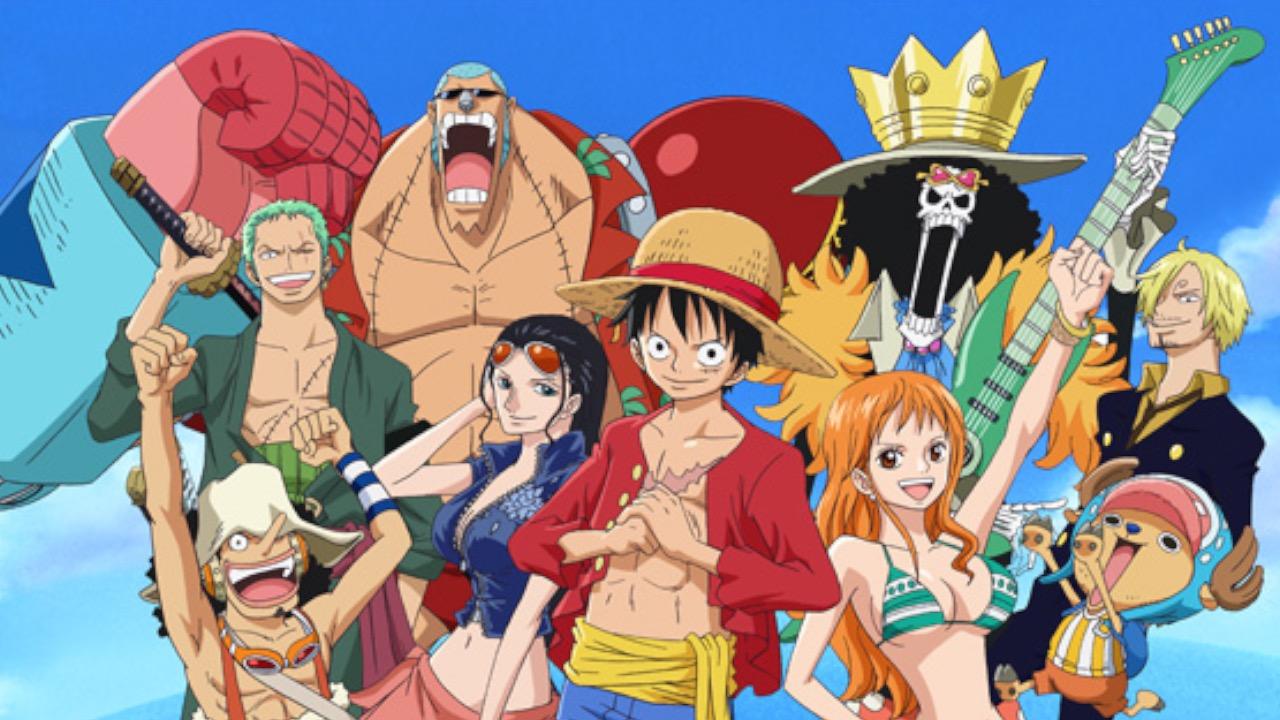
Straw Hat Pirates: The essential One Piece manga characters
The Straw Hat Pirates are the story’s emotional center. If you understand the crew, you understand One Piece’s values: freedom, loyalty, and refusing to let status decide someone’s worth.
Monkey D. Luffy
Luffy is the captain and the narrative engine. His defining feature is not strategy or pedigree, but an uncompromising belief in freedom. Luffy recruits people based on who they are, not what society says they should be. That is why his crew becomes such a powerful symbol in a world filled with hierarchy.
Why Luffy matters beyond being “the main character”:
- He destabilizes oppressive systems simply by refusing to accept them
- He turns enemies into allies by treating people as people first
- He makes the world react because his choices force hidden truths into the open
Roronoa Zoro
Zoro is the swordsman and combat pillar. He embodies discipline and resolve, often acting as the crew’s internal “standard” for seriousness when the stakes rise. Zoro’s dream of becoming the world’s greatest swordsman is simple, which is why it is so powerful: every step forward is measurable and costly.
What makes Zoro a cornerstone character:
- Consistency under pressure
- Loyalty that shows in action, not speeches
- A personal code that anchors the crew’s tone in critical moments
Nami

Nami is the navigator and a strategic survival asset. In One Piece, navigation is not background flavor. Routes, weather, and ocean conditions can kill you. Nami’s intelligence and practical judgment keep the crew alive, and her emotional arc highlights what freedom costs and why security matters.
Nami’s role often expands into:
- Tactical decision-making during chaos
- Emotional realism when others act recklessly
- Resource management that supports the crew’s long-term journey
Usopp
Usopp is the sniper and the most relatable “human scale” viewpoint. He is often frightened, and that is exactly why his bravery lands. Usopp’s best moments are not about being fearless, but about choosing to show up anyway.
Usopp represents:
- Courage as a decision, not a personality trait
- Creativity as strength, especially when raw power is not enough
- Growth through self-respect, not through becoming a different person entirely
Sanji
Sanji is the cook and one of the most layered Straw Hats because he combines comedy, ethics, and trauma into a single character line. His moral code shapes how he fights and what he refuses to do, which creates genuine tension in battles where “winning” can conflict with values.
Sanji’s importance is both practical and thematic:
- He keeps the crew functioning in a literal sense through food and care
- He explores class, identity, and family systems through his backstory
- He adds emotional intelligence to a crew that often charges forward headfirst
Tony Tony Chopper
Chopper is the doctor and a central “belonging” narrative. He starts as an outsider, becomes a symbol of found family, and grows into someone who believes he deserves a place in the world. One Piece consistently uses illness, injury, and poison-like threats, making a doctor indispensable.
Chopper’s arc reinforces:
- Acceptance without conditions
- Competence as a form of self-worth
- Kindness as strength in a world that rewards cruelty
Nico Robin
Robin is the archaeologist and the key to the story’s deepest mysteries. She connects directly to the hidden history thread that runs under the entire series. Robin’s emotional resonance comes from the question that defines her arc: what does it mean to be allowed to exist?
Robin contributes:
- Lore progression tied to the world’s secrets
- Calm intelligence during chaos
- A mature emotional tone that balances the crew’s comedy and intensity
Franky
Franky is the shipwright and the embodiment of One Piece’s joyful weirdness. He turns engineering into personality, showing that invention can be loud, emotional, and dream-driven. His craftsmanship is inseparable from his identity.
Franky is important because:
- The ship is a character-level asset in a story about oceans
- He represents chosen identity and pride in being unapologetically yourself
- He bridges humor and high stakes without feeling out of place
Brook
Brook is the musician and the blend of comedy and tragedy. He is often used for jokes, but his loneliness and endurance add depth. Brook reminds the reader that the sea does not only offer adventure. It also takes time, people, and entire lifetimes.
Brook’s presence reinforces:
- Memory as resistance
- Music as identity
- The emotional cost of the journey
Jinbe
Jinbe is the helmsman and a symbol of political history, prejudice, and coexistence. His perspective expands the Straw Hats’ role from “adventurers” into “players in world-scale conflict.” He adds stability and maturity as the story moves into heavier endgame politics.
Jinbe often functions as:
- A moral bridge between factions
- A diplomatic stabilizer inside the crew
- A living reminder that freedom is inseparable from social justice in One Piece
Key allies and recurring friends you should recognize
One Piece is famous for allies who feel like temporary crew members, then return later as major forces. You do not need to memorize every side character, but remembering the “repeat-return allies” makes later arcs much easier.
The honorary companion pattern
Oda frequently introduces allies who travel with the Straw Hats for an arc, form deep bonds, then stay connected through the wider world. These allies typically:
- represent an island’s future
- gain freedom or identity through the Straw Hats
- return later as reinforcements, political connectors, or emotional callbacks
Trafalgar Law and the rival-ally archetype
Some recurring allies are also rivals. The most notable examples are pirates whose goals overlap with Luffy’s enough to form alliances, while still maintaining independent ambitions. This category matters because it makes the world feel competitive rather than centered only on the Straw Hats.
Vivi and the “world politics bridge”
Characters like Vivi matter because they connect the crew’s personal freedom story to broader political consequences. Even when they are off-screen, their existence keeps earlier arcs relevant and reinforces the idea that island-level conflicts echo globally.
Rival pirates and the “Worst Generation” effect
One Piece does not treat Luffy as the only ambitious rising star. Rival pirates exist to show that history is being pushed forward by multiple forces at once. This is how One Piece avoids feeling like a single-lane hero narrative.
Why rival pirates matter for the cast:
- They complicate power scaling by creating multiple top tiers
- They drive alliance and betrayal dynamics
- They offer alternative philosophies of freedom and ambition
If you are tracking characters, it helps to remember that rival crews are often written as mirrors: they show what Luffy could have been with different values.
Marines and the World Government: the institutional cast
To understand One Piece manga characters at scale, you must understand the institutions. The Marines and World Government operate as systemic forces, not just organizations with uniforms.
Marines: justice as a spectrum
The Marines are not a single moral bloc. One Piece uses Marine characters to explore competing versions of justice:
- Absolute justice: order at any cost
- Moral justice: order must protect people, not power
- Pragmatic justice: order is compromise and containment
This is why some Marines feel heroic, and others feel villainous, even when they share a flag. Marine characters also frequently challenge the reader’s assumptions: the system can be corrupt while individuals within it still try to do good.
Admirals and top leadership
At the top of the Marines are characters who represent the state’s raw power. These figures tend to operate at a scale that affects world stability. They matter because One Piece’s endgame is as political as it is combat-driven, and top Marines often function like moving pieces in a global chess match.
World Government: control, secrecy, and legitimacy
The World Government is written as a global authority that maintains legitimacy through power, information control, and historical suppression. Many of its most impactful “characters” are not always on page, because the institution itself is treated like a living antagonist.
What the World Government represents:
- Control over truth
- Power without accountability
- A hierarchy that fears change
Cipher Pol and covert enforcers
Covert agencies exist in One Piece to show how power operates when it does not want public scrutiny. These characters often feel colder, more ideological, and less emotionally driven than pirates, which creates strong contrast with the Straw Hats’ found-family vibe.
Emperors and major pirate crews: the heavyweight cast
The Emperors (often called the “Four Emperors”) represent pirate power at the highest level, but membership can change over time as the world shifts. Rather than treating them as just “big villains,” One Piece portrays Emperor crews as self-contained political systems.
How to think about Emperor crews
Instead of memorizing every commander, focus on three layers:
- The captain: the worldview and ideology
- Top commanders: the enforcement and operational style
- Territory and allies: the influence network that makes them global
This approach turns a massive list into a readable structure.
Why Emperor characters feel bigger than other antagonists
Emperors are not just strong. They have reach. Their existence shapes global stability, trade, safety, and the decisions the World Government makes. When an Emperor moves, the world reacts, which is why these characters feel like tectonic plates rather than single enemies.
Warlords and the “legal pirate” era
The Seven Warlords of the Sea system is one of One Piece’s most important structural ideas: pirates granted legal status in exchange for serving “stability.” Even if you do not track every Warlord, understanding the system helps you understand the character ecosystem.
Why Warlords matter for character reading:
- They blur the line between villain and ally
- They show how “order” can be transactional and hypocritical
- They produce many of the series’ most iconic designs and abilities
Warlord characters often have three traits:
- extreme confidence
- morally complicated motivations
- story relevance that returns later in unexpected ways
The Revolutionary Army: rebellion as a character ecosystem
The Revolutionary Army represents systemic resistance. While pirates often fight for personal freedom, revolutionaries fight for societal liberation. That distinction matters because it adds ideological depth to the cast: not everyone wants freedom for themselves alone.
Why revolutionary characters are important:
- They connect personal dreams to global oppression
- They push the truth-and-history plot forward
- They create tension with pirates who are not politically motivated
As One Piece approaches later arcs, revolutionary figures tend to become more relevant because the series shifts from isolated island stories to global power structures and historical reckoning.
Scientists and the late-series expansion of the roster
As One Piece becomes more lore-dense, science and technology become major plot engines. This introduces a different type of character: researchers, engineers, and institutional innovators.
Dr. Vegapunk and the science cast
Vegapunk’s presence expands the cast in a distinctive way because it ties together multiple long-running threads: advanced technology, the World Government’s reach, and the mechanics behind world mysteries. In practical reading terms, it helps to treat the science-focused characters as their own category rather than trying to map them directly onto pirate-versus-Marine labels.
A clean way to remember late-series science characters:
- Their function: what system they influence (weapons, research, travel, information)
- Their alignment: independence, government cooperation, or rebellion
- Their moral posture: curiosity, pragmatism, ambition, or conscience
Arc-based characters: how One Piece makes islands feel real
Many One Piece characters are introduced for a specific arc, then return later. That return is one reason the world feels consistent. If you are reading and feeling overwhelmed, focus on “arc leaders” rather than every citizen.
Arc leaders you should track
In most arcs, there are usually four recurring character roles:
- Local ally leader: helps the Straw Hats understand the conflict
- Local victim figure: makes the oppression feel personal
- Primary antagonist: represents the arc’s core evil
- Hidden connector: ties the arc to bigger world politics
Once you identify those four roles, the rest of the arc’s cast becomes easier to place.
The Grand Fleet and the “network effect”
Another reason One Piece’s cast grows is that Luffy’s actions create ripple alliances. Characters who were once local become global actors because they choose to attach their dreams to the Straw Hats’ momentum. This “network effect” is part of One Piece’s endgame structure: the series builds a world where relationships matter as much as combat.
How Oda makes a massive character list easy to follow
One Piece can be read smoothly even with its huge cast because Oda uses reliable design and writing strategies.
Visual identity as a memory tool
Distinct silhouettes are not accidental. They are a readability mechanism. Even if a character disappears for hundreds of chapters, a unique outline or signature accessory makes recognition instant when they return.
Titles and roles function like navigation labels
One Piece constantly tags characters with roles that act like metadata. If you remember a title, you can remember a character’s “place” even if you forget their full backstory.
Repeating themes help you categorize new characters quickly
Oda builds characters around recurring motifs:
- inherited will
- freedom versus control
- dreams as identity
- found family versus bloodline obligation
When you meet a new character, asking “which motif are they embodying?” helps you understand them fast.
Practical tips for tracking One Piece manga characters while reading
If you are starting One Piece or returning after a break, these methods work well.
Learn characters by layers, not all at once
Start with:
- Straw Hats
- Main Marines and Government figures
- Major pirate crews (captains and top commanders)
- Recurring allies
- Arc-specific characters
This matches how the story itself expands.
Use quick “role tagging” notes
Instead of writing long bios, note:
- Name
- Faction
- Role
- One defining trait
Example style:
- “Smoker, Marine, pursuer, stubborn justice”
- “Law, pirate, strategist, uneasy ally”
This is enough to keep your mental map intact.
Revisit arc openings
Arc openings are built to introduce the local cast. If you feel lost, re-read the first chapters of an arc and you will usually regain character clarity quickly.
Where to read One Piece and keep the cast straight
If your goal is to understand One Piece manga characters without losing track, reading in order is the best strategy. ComicK is also a practical place to follow the series while revisiting arc starts and major character introductions whenever someone reappears later.
From the ComicK team’s viewpoint, One Piece rewards readers who treat character relationships as long-term investments, not one-arc details.
One Piece manga characters are numerous because the story is a world, not a hallway. The Straw Hats are the core, but the series gains its scale from the institutions around them, the rival pirate ecosystem, and the arc-based allies and antagonists who return later with lasting consequences.
If you learn the cast by faction and role, the roster becomes readable, and One Piece’s biggest strength becomes obvious: it makes the world feel alive through people.
FAQ – One Piece Manga Characters
1) Who are the main One Piece manga characters?
The main cast is the Straw Hat Pirates: Luffy, Zoro, Nami, Usopp, Sanji, Chopper, Robin, Franky, Brook, and Jinbe.
2) How many Straw Hats are there?
The core Straw Hat crew is commonly treated as ten main members, centered around Luffy as captain.
3) Who are the most important factions to understand the cast?
The three major categories are pirates (including Emperors and rival crews), the Marines and World Government, and revolutionaries, plus recurring arc allies.
4) Why are there so many characters in One Piece?
Because each island introduces a new society with its own leaders and conflicts, and many characters later return as the global story converges.
5) Are the Marines villains in One Piece?
Not universally. One Piece portrays Marines with different philosophies of justice, including heroic, corrupt, and conflicted individuals.
6) What role does the World Government play in character conflicts?
It represents global control, secrecy, and legitimacy, often functioning as a systemic antagonist rather than a single “villain character.”
7) What are Emperors and why do they matter?
Emperors are top-tier pirate powers whose influence shapes global stability. Their crews often function like political networks, not just battle squads.
8) What are the Warlords and why are they important?
Warlords are pirates who were given legal status under a government system meant to maintain stability, creating morally complicated characters and conflicts.
9) Who is Dr. Vegapunk and why do readers talk about him?
Vegapunk is a major science figure tied to advanced technology and late-series mysteries, expanding the cast into a more lore-driven direction.
10) Where should I read One Piece to keep track of characters easily?
Reading on ComicK and revisiting arc openings is a practical way to track character introductions and remember relationships as the cast expands.
You may also like:
Why Is Noelle Obsessed With Asta? The Real Reasons Behind Her Feelings in Black Clover
Dandadan Characters You Need to Know: Deep Dive into the Manga’s Cast
Does Asta Become the Wizard King? Canon Answer, Current Status
