
As of now, there is no officially confirmed Season 7 continuation of the 2011 TV anime, which ended at 148 episodes.
At ComicK, our team monitors verified production signals, official announcements, and reliable release patterns so fans can separate real updates from recycled rumors and misleading “Season 7” labels.
Next, you’ll get 10 brutal truths about what actually blocks a return, what would need to change for a sequel to happen, and the smartest way to follow credible news without getting baited.
The current status: is hunter x hunter anime coming back in an actual Season 7?
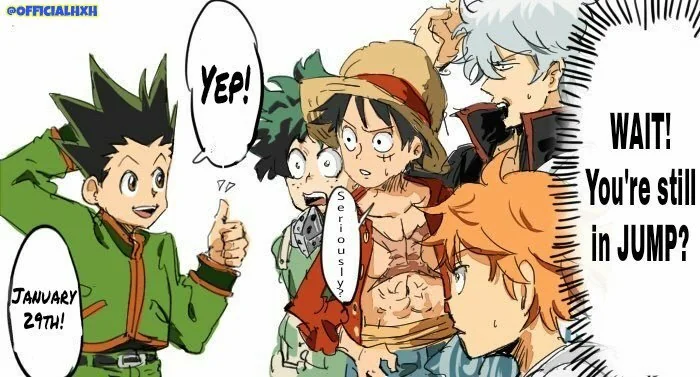
There is a major difference between “Hunter x Hunter is back” and “the 2011 TV anime is getting Season 7.” Right now, there is no official confirmation of a Season 7 continuation for the 2011 adaptation.
That does not mean nothing is happening around the brand. It means that nothing has been announced that constitutes a new season of TV episodes continuing past the 2011 ending.
Why does this distinction matter? Because the internet uses “coming back” loosely. A promotional animation video, a collaboration trailer, an anniversary project, or a game-related opening movie can all feature new animation and still have zero relationship to a TV sequel.
Those announcements are real, but they are not the thing fans mean when they say “Season 7.”
If you want a simple, reliable rule, use this: if a piece of news does not clearly state it is a new anime series or a new season with an episode format, treat it as franchise activity rather than a continuation.
Season 7 talk is especially vulnerable to misinformation because platforms and content creators often label anything new as “Season 7” for clicks.
If your goal is practical planning, assume there is no return until an official production announcement specifies format, production partners, and a real timing window.
Why Season 7 is unusually hard: manga pace, arc structure, and the stopping point problem
Most anime sequels depend on two things: enough source material and a satisfying place to end a season. Hunter x Hunter adds a third constraint that is impossible to ignore: the manga’s publication pace can be unpredictable due to the author’s long-running health challenges and hiatus history.
That unpredictability matters to studios and production committees because an anime season is not just “animation.” It requires a stable pipeline for scripts, storyboards, voice sessions, editing, broadcast scheduling, and marketing.
The second issue is structural. Later Hunter x Hunter material becomes more information dense. It leans into political maneuvering, faction logic, and slow-burn tension rather than the early series’ more straightforward adventure rhythm.
Many fans love that shift, but it changes adaptation economics. Dense storytelling can still work in anime, but it demands careful series composition. You need to translate complex setups into episodes that feel watchable and rewarding, not like constant exposition.
The third issue is the stopping point problem. The 2011 anime ends at a strong emotional checkpoint, but the material after it does not immediately offer an equally clean “season finale” breakpoint. A committee does not just ask, “Do we have chapters?” It asks, “Do we have a season-shaped arc that ends in a satisfying place?”
When these constraints stack together, you get the core reality: a Season 7 is not impossible, but it is harder to package cleanly than fans assume.
What the 2011 anime covered and what Season 7 would actually adapt
The 2011 adaptation is a single continuous run totaling 148 episodes. It adapts a substantial portion of the manga and ends at a point that functions as a thematic wrap for a major chapter of the story.
That ending is a big reason the show remains evergreen. Viewers can finish it and feel closure, even while knowing there is more beyond the anime.
When people say “Season 7,” what they usually mean is a continuation into the manga material that comes after the anime’s endpoint. That continuation is not simply “more of the same.”
The story’s scope expands, focus shifts among characters, and the narrative becomes more strategic and political. It is still Hunter x Hunter in spirit, but it is often less about simple objectives and more about systems, power structures, alliances, and long-term consequences.
That matters because adaptation expectations would be intense. Fans would not just want “more episodes.” They would want the same standard of pacing, emotional payoff, and strategic clarity that made the 2011 series beloved.
Achieving that with denser material requires strong planning. The writing team would likely need to restructure certain sequences for episode flow while staying faithful to the manga’s logic.
A legitimate Season 7 would also need clear messaging about what it is adapting. Otherwise, it will be confused with non-TV animation projects, which has already happened repeatedly in fandom discussions.
Studio and production realities: what actually decides a return
Even if enough source material exists, anime does not return by popular demand alone. It returns when a production committee can align financing, scheduling, and talent.
That includes animation staff, directors, episode directors, series composition, background artists, compositors, and a realistic delivery plan that matches modern broadcast and streaming requirements.
Many fans assume the 2011 studio will automatically return. In reality, studio identity is not guaranteed. Committees change, studio pipelines fill up, priorities shift, and availability drives decisions. A continuation could be handled by the same studio, a different studio, or a new production structure altogether.
Voice cast scheduling adds another layer. Coordinating returning voice actors can be manageable, but it still becomes a constraint, especially when projects are long and recording windows must be synchronized with animation delivery.
Platform strategy is also decisive. A modern sequel is rarely “TV only.” It is usually built with international streaming distribution in mind, meaning rights deals and release windows can influence when an announcement happens.
Some projects are kept quiet until licensing is aligned because an early announcement creates pressure the committee cannot operationally support.
The key point is this: “there is enough story left” is not the same as “there is a viable season plan.” A return requires a production calendar and a narrative plan that produces a satisfying season arc, not a half-adapted fragment.
10 brutal truths about Season 7 that fans need to hear
- No announcement means no schedule
Without an official announcement, there is no production calendar you can trust. - New animation does not equal new season
Promos and game footage can feature new animation without any TV episodes attached. - Source material must be season-shaped, not just abundant
A season needs a beginning, escalation, and a credible finale point. - Hunter x Hunter is expensive to do right
Nen battles and strategic conflicts demand clarity and strong direction. Cheap execution would damage the franchise. - Later material is harder to adapt
More factions, more dialogue, and more political logic means more adaptation complexity. - Studio involvement is not guaranteed
A future continuation may not look identical to 2011 because production partners could change. - Manga pace drives committee risk tolerance
Unpredictable release patterns make multi-season planning harder. - Streaming “Season 7” labels are often fiction
Platforms split shows into seasons for navigation and licensing. That does not confirm new episodes. - Most leaks are recycled marketing
Old visuals, fan edits, and unrelated announcements often get repackaged as “Season 7 confirmed.” - The first real sign will be boring
Legitimate signals are official project pages, committee credits, and verified industry announcements, not viral posts.
This list is not meant to kill excitement. It is meant to protect you from wasting time on misinformation.
What would need to happen for Hunter x Hunter to return as a true continuation
A realistic continuation usually requires four conditions to align.
First, there needs to be enough manga material to adapt without immediately catching up, and it needs to form a coherent season unit with a satisfying endpoint. Many sequels fail because they end mid-setup, which frustrates viewers and weakens momentum.
Second, the production committee needs a strong performance case across channels. That includes domestic broadcast economics, global streaming revenue, home video potential, and merchandising. Hunter x Hunter has brand strength, but the committee must still believe the timing and format maximize returns.
Third, the project must secure a team capable of delivering quality at the standard audiences expect. The later story’s complexity makes series composition and pacing choices critical. A continuation would need writers and directors who can translate dense arcs into episodes that feel tense, clear, and emotionally meaningful.
Fourth, messaging must be explicit. Many fans confuse franchise animation projects with TV seasons. A true continuation needs clear labeling, TV or streaming series format, and a defined scope so expectations are aligned.
If you want an actionable takeaway, it is this: do not look for “a date.” Look for “a format plus scope plus committee confirmation.” That combination is what converts hope into reality.
How to spot real Season 7 news and avoid rumors that waste your time
Hunter x Hunter rumor culture thrives because fans are emotionally invested and the franchise is large enough that any scrap of news gets amplified. The solution is not cynicism. It is a verification checklist.
Start with the source. Trust official announcements, verified studio or committee communications, and reputable industry outlets reporting on production specifics. Be cautious of pages that say “confirmed” without stating who confirmed it or where the confirmation is published.
Next, classify the announcement. Is it a TV series, a streaming original, a film, an OVA, a promotional video, or a game-related animation? If the announcement does not clearly state “anime series” or “new season,” treat it as promotional content, not a continuation.
Then, look for specifics. Real announcements usually include at least some combination of production partners, format, or a timeframe. Vague language like “returning soon” is a red flag.
At ComicK, the simplest internal rule is: if a headline does not answer who is producing it and what format it is, it is not actionable. Use that rule and you will avoid most hype traps.
What to do while waiting: the best watch and read plan for new and returning fans
Waiting for Season 7 does not have to mean living on rumor refresh. A practical plan keeps you engaged with the franchise and reduces the frustration that comes from expectation inflation.
First, if you have never completed the 2011 run, start there. It is 148 episodes, coherent, and ends at a meaningful checkpoint. If you have already watched it, a rewatch can still be valuable because the Nen system, strategic foreshadowing, and character motivations read differently on a second pass.
Second, consider the 1999 adaptation as a companion view. It offers a different atmosphere and pacing that some fans prefer for certain story beats. Just remember it is a separate adaptation line and may require extra tracking if you want to follow its OVAs.
Third, if your main desire is content beyond the anime ending, read the manga continuation. Just set expectations correctly. Later material is more political and information-heavy, and it rewards slower reading rather than speed-running for plot points.
Finally, keep your update sources clean. The healthiest approach is to check reliable channels around major anime announcement windows and ignore constant “insider” speculation.
Many ComicK readers maintain a simple checklist for updates: official announcement, confirmed format, confirmed production partners, confirmed timeframe. Until those boxes are checked, treat “Season 7” talk as noise.
FAQ: quick answers about Hunter x Hunter Season 7
1) Is hunter x hunter anime coming back as Season 7?
There is no officially confirmed Season 7 continuation of the 2011 TV anime at this time.
2) How many episodes does Hunter x Hunter (2011) have?
Hunter x Hunter (2011) has 148 episodes.
3) Why do people say it is “back” when there is no new season?
Because new animated footage can appear in promos, events, or game projects without any TV episodes attached.
4) Did the 2011 anime end because it was cancelled?
It ended after adapting a major portion of the manga and reaching a strong stopping point, with continuation complicated by source material pace.
5) Will the same studio definitely make Season 7?
Not guaranteed. Studio involvement depends on production committee decisions and scheduling.
6) Is there enough manga for a new season?
Possibly, but the key issue is whether there is a season-shaped narrative unit with a satisfying endpoint.
7) Are there official release dates for Season 7?
No. Any release date claims without official confirmation should be treated as rumors.
8) Should I watch 1999 or 2011 first?
Most new fans should start with 2011 for the clearest, most complete watch path.
9) Are the movies required?
No. They are optional and do not replace the main arc progression.
10) What is the best way to track updates without getting fooled?
Rely on official announcements and confirm format, production partners, and a timing window before believing “Season 7” claims.
Conclusion: the most realistic answer and how to stay hype without getting fooled
Hunter x Hunter remains one of the most demanded anime continuations, but demand alone does not produce a greenlit season. The facts that matter are stable: the 2011 anime is 148 episodes, it ends at a strong checkpoint, and a true continuation requires both season-shaped source material and production committee alignment.
So, is hunter x hunter anime coming back as Season 7? Not officially, not yet. In the meantime, expect ongoing franchise activity in other formats and continued speculation that often overreaches.
If you want to stay excited without getting misled, anchor your expectations to official confirmations, track by episode numbers rather than streaming season labels, and use a simple ComicK-style checklist mindset. No format, no production partners, no timeframe means no Season 7.
You may also like:
What Is Hunter x Hunter About? 11 Mind-Blowing Facts New Fans Must Know
How Many Episodes Does Hunter x Hunter Have? 5 Surprising Facts You Need to Know!
What Studio Had Hunter x Hunter Anime? 7 Brutal Truths About Anime Remakes
