
Near is 13 years old when he’s introduced before Death Note’s major time skip, and he is about 17 to 18 years old during the later phase of the Kira investigation after the time skip. If you have seen other numbers floating around, they usually come from mixing timelines, mixing adaptations, or treating Near’s intentionally childlike design as literal age.
At ComicK, we see this question come up again and again for a simple reason: Death Note does not pause to hand you character ages in dramatic dialogue. You are meant to infer time passing through the investigation, the shifting world’s response to Kira, and the story’s structural pivot. Once you understand that structure, Near’s age becomes far less mysterious.
How Old Is Near From Death Note? The Short Answer Most People Actually Need
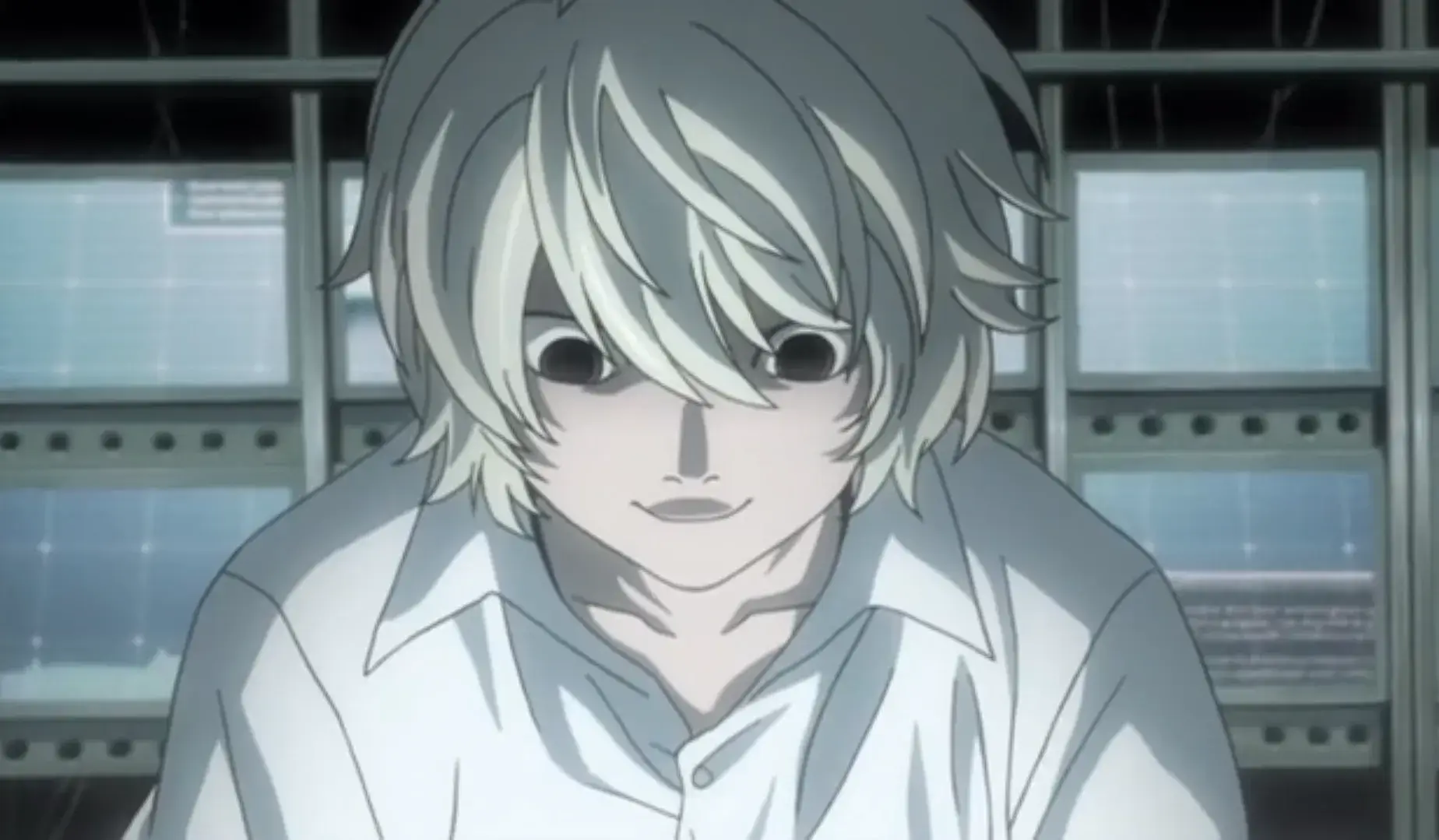
Here is the clean version you can keep in mind while reading:
- Near is 13 before the time skip.
- Near is about 17 to 18 after the time skip.
If you stop here, you already have the correct core answer for the main manga and anime storyline.
Now let’s address why the fandom keeps arguing about it.
Why Near’s Age Feels Confusing Even When the Numbers Are Clear
Near’s age confusion is not just “fans missing details.” It is a predictable side effect of how Death Note is written and how Near is designed.
Death Note treats character info as background, not foreground
A lot of series give you neat profile cards. Death Note does the opposite. It is a psychological thriller in manga form. The story focuses on pressure, deduction, risk, and consequence. Ages, birthdays, and basic biography are mostly left to official profiles and guide-style materials rather than emphasized in the narrative.
The time skip is big emotionally, but smaller than many people assume
Because Death Note’s stakes escalate so drastically, the time skip can feel like “an entire era.” Viewers often interpret that emotional shift as a much larger stretch of years than it actually is. That instinct pushes people to age Near up into his twenties.
Near is visually and behaviorally coded to look younger
Even when Near is a late teen, the series intentionally keeps him small, pale, soft-featured, and child-coded through clothing and posture. On top of that, he often thinks while playing with toys and puzzles. Many audiences convert those cues directly into a younger age estimate, even though the story’s timeline puts him older.
Multiple continuities create “multiple correct answers” depending on what you mean
If you are talking strictly about the core manga story, the age split above is the most consistent answer. If you are talking about later supplementary content, the live-action adaptations, or alternate timeline materials, you may see different years, or different implied ages. Fans rarely specify which continuity they mean, so disagreement becomes inevitable.
ComicK team share: when someone says “Near is 13” and another says “Near is 18,” both are usually correct. They are just talking about different points in the same story.
A Simple Timeline Framework That Fixes 90 Percent of the Confusion
You do not need to memorize every date in Death Note to understand Near’s age. You only need a two-stage lens.
Pre time skip Near
Near appears as a prodigy successor candidate, still young, still in the “potential” stage. This is the Near many fans picture first, and this is where the 13 years old figure belongs.
Post time skip Near
After the story jumps forward, Near re-enters as a more established figure with operational responsibility and a clearer role in the Kira case. This is where the 17 to 18 years old range belongs.
If a source gives you only one number without indicating which phase it refers to, it is not giving you a full answer.
The 7 Facts Fans Keep Missing About Near’s Age

Fact: Near’s age is commonly presented as a split, not a single number
Near is one of those characters whose age is often listed in two parts because the time skip changes everything about his role.
- Before the time skip: 13
- After the time skip: about 17 to 18
This is the simplest reason online answers conflict. People quote one number as if it covers the whole story, and it does not.
Fact: Near’s youthful appearance is not an accident, it is a deliberate storytelling device
Death Note wants Near to feel unsettling in the room.
He is surrounded by adults, institutions, and global stakes, and yet he looks like someone you would not trust with a leadership role. That contrast creates tension before he says a word. It forces the audience to decide whether they believe appearances or outcomes.
A thriller thrives on that kind of friction. Near’s design creates the friction.
Fact: Near’s child-coded habits are meant to communicate how he thinks, not how old he is
Near often manipulates toys, puzzles, and small objects while reasoning. That does not mean he is a child in story terms. It means the author is giving you an externalized thinking process.
Those behaviors accomplish three narrative goals:
- They echo L without copying him.
L is eccentric in ways that make him memorable. Near inherits the “odd genius” vibe but expresses it differently. - They separate Near from Mello.
Near is calm and analytical. Mello is intense and emotional. The contrast is sharper when Near is visually and behaviorally quiet. - They make Near easy to underestimate.
Underestimation is a recurring weapon in Death Note. Characters win by controlling what others believe about them.
So if Near feels younger than his age, that is the story working as intended.
Fact: The time skip makes Near “functionally adult” without visually aging him
A lot of series use time skips to give characters a glow-up. Death Note does not. Near does not become taller, broader, or more conventionally mature-looking in the way a typical shonen time skip would present. Instead, he gains something else: authority, strategy, and institutional influence.
That is why viewers feel a mismatch. They see a young-looking figure acting in an adult role.
But Death Note is not interested in making Near feel comfortable. It is interested in making Near feel like a cold, efficient successor system at work.
Fact: “Near is 20+” is usually a timeline mix-up with later materials
You may see ages like 21 or older attached to Near in discussions that reference content set after the original series events. Those numbers can exist in post-story contexts, but they do not apply to Near during the main Kira investigation.
Here is the safe mental model:
- Main story Near: 13, then 17 to 18
- Later timeline Near: older, depending on how far after the original ending the material is set
If you are reading the original story, use the main story numbers.
Fact: Manga and anime details can differ slightly, which changes “exact year” math
Fans sometimes try to compute Near’s age down to the month by tying him to a birth year and the story’s implied calendar years. That can become messy because adaptations sometimes adjust details like the specific year associated with certain events, or the way the timeline is framed.
That does not usually change the practical answer that matters to readers. It mainly changes the “what year was he born?” arguments.
If your goal is to understand Near’s role and maturity level in the story, the phase-based answer is the cleanest approach.
Fact: Near’s “young genius” role is a thematic statement about the Death Note world
Near’s age is not just trivia. It supports a theme.
Death Note repeatedly shows that institutions will elevate whoever can deliver results, even if the person does not fit the expected image of authority. Wammy’s House itself is a statement: it produces successors like a machine, trained to replace legends.
Near being a teenager when he takes on the Kira case is the point. The world is not waiting for him to grow up. The world is forcing him into position because the stakes do not allow time.
ComicK team share: if you reread Near’s scenes as a corporate succession problem or an intelligence-agency handover problem, he feels more believable. He is not “a kid playing detective.” He is the product of a successor pipeline that values outcomes over normal development.
What Near’s Age Means for His Character and for the Story
Once you accept Near’s age range, several choices in Death Note become clearer.
Near’s calmness reads differently
If you thought Near was in his twenties, his calmness might feel like ordinary professionalism. But if you recognize he is still a teenager, his calmness becomes more unsettling. It suggests emotional distance, intense training, or both.
Near’s leadership becomes part of Death Note’s “systems” critique
Death Note does not only criticize individuals. It critiques systems: police systems, government systems, media systems, and even the “genius system” that creates successors.
Near is a systems character. His age reinforces that idea. He is not a lone hero who stumbled into greatness. He is a designed successor, inserted into a crisis.
Near’s rivalry dynamics make more sense
Near is often compared to L and Light, but he is not meant to copy either one.
- He does not win by charisma the way Light influences people.
- He does not win by sheer eccentric magnetism the way L dominates rooms.
- He wins by structure, patience, and leveraging institutions.
That fits a younger character who learned from a predecessor’s failure rather than building his own legend from scratch.
Common Wrong Answers and What They Usually Mean

If you keep seeing contradictory answers, here is how to interpret them quickly.
“Near is 13.”
Usually refers to Near’s introduction and ignores the time skip.
“Near is 17” or “Near is 18.”
Usually refers to the post time skip investigation era and ignores the earlier phase.
“Near is 20+.”
Usually refers to later timeline materials or assumes a larger time skip than the story actually uses.
“Near is 10 or 11.”
Usually comes from visual guessing, not from the story’s timeline.
If you want one rule to avoid confusion: always ask, “Pre time skip or post time skip?”
Near’s Age Compared to How He Feels on Screen
It is completely normal to think Near feels younger than 17 to 18. That is the effect of design plus behavior.
Visual coding
Small frame, pale design, and simple clothing choices keep him from looking like a typical late-teen anime character.
Behavioral coding
Toys and puzzles, minimal expression, and unusual posture push the audience to read “childlike.”
Social coding
Near does not perform confidence socially. He does not use “adult dominance” cues. He does not attempt to charm. In most stories, characters who lead operations are portrayed as socially commanding. Near is not. That absence makes him feel younger.
But none of that changes the canon timeline logic. It simply explains why the debate exists.
The Cleanest Way to Explain Near’s Age to a Friend
If you want a simple, accurate explanation without turning it into a research project:
- Near is a young prodigy introduced at 13.
- The story jumps forward several years.
- Near returns as the leader of a major investigative effort at about 17 to 18.
- He still looks and behaves childlike because that is how the author signals his thinking style and makes him easy to underestimate.
That is all you need.
FAQs
How old is Near from Death Note?
Near is 13 before the time skip and about 17 to 18 after the time skip during the later Kira investigation.
How old is Near when he first appears in the story?
Near is commonly presented as 13 at his initial introduction phase.
How old is Near during the final part of the Kira case?
Near is generally portrayed as about 17 to 18 during the post time skip endgame.
Why do some people say Near is only 13?
Because they are referencing his pre time skip introduction and not accounting for the years that pass afterward.
Why do some people say Near is over 20?
They are usually mixing in later timeline material, mixing adaptations, or assuming a longer time skip than the story actually uses.
Does the anime change Near’s age compared to the manga?
The practical phase-based answer remains the same: 13 pre time skip and about 17 to 18 post time skip. Minor timeline details and year-based calculations can vary depending on continuity framing.
Why does Near look so young even after the time skip?
Because his design and habits are intentionally child-coded: small build, simple wardrobe, toys and puzzles as thinking tools, and minimal emotional display.
Is Near a child genius or a teenager genius?
In the main storyline, he is best described as a teenage genius during the later investigation, even if his design makes him appear younger.
Is Near older or younger than Mello?
Near is generally presented as the younger successor figure compared to Mello, which is part of their contrast.
What is the simplest one-sentence answer to settle the debate?
Near is 13 before the time skip and about 17 to 18 after the time skip in the main Death Note storyline.
You may also like:
Is Blue Lock Manga Finished? 4 Dramatic Clues Fans Keep Missing
When Did Death Note Come Out? 5 Powerful Facts That Set the Record Straigh
How Many Seasons of Death Note Are There? 9 Explosive Details You Need to Know
