
Hunter x Hunter (2011) has 148 episodes, while Hunter x Hunter (1999) has 62 episodes (with additional OVAs depending on how platforms package them).
At ComicK, our team cross-checks official episode numbering against arc structure and common streaming “season” splits so you can track your progress accurately, avoid version mix-ups, and stay spoiler-safe. In this guide, you’ll get a clear breakdown by adaptation, an arc-by-arc roadmap, and the simplest watch approach to start right away.
How many episodes does Hunter x Hunter have across all anime versions?

When people search how many episodes does hunter x hunter have, they are usually asking about the 2011 adaptation because it is the definitive gateway for new viewers. That version runs for 148 episodes total and tells a complete “anime-sized” story with a strong stopping point.
However, Hunter x Hunter also has an earlier adaptation from 1999, and that is where the confusion starts. The 1999 TV series has 62 episodes, and its story continues through OVA releases rather than a longer weekly broadcast run. Those OVAs are often packaged like mini-seasons, so you may see different counts depending on whether a platform lists OVAs separately, bundles them together, or excludes them entirely.
To keep it straightforward, think of it like this:
- Hunter x Hunter (2011): 148 episodes (single continuous run, commonly split into “seasons” by streaming services)
- Hunter x Hunter (1999): 62 episodes (TV run)
- 1999 OVAs: three continuation sets that carry the 1999 storyline further (often labeled as Yorknew, Greed Island, and Greed Island Final in various releases)
If you are deciding what to watch, the 2011 series is the most consistent, most accessible, and easiest to follow without any extra labeling confusion. The 1999 version is best approached as an alternate take with a different tone, different pacing, and add-on OVAs that may require more careful tracking.
The 148-episode Hunter x Hunter (2011) run, explained for first-time viewers
The 2011 adaptation (produced by Madhouse) is widely treated as the “main” Hunter x Hunter anime experience for a reason: it is coherent, modern in presentation, and structured in a way that makes binge-watching realistic. Those 148 episodes cover major arcs with escalating stakes, moving from classic shonen adventure into strategic battles, moral ambiguity, and power-system depth.
A major reason the episode count feels “just right” is the show’s pacing. It is rarely a monster-of-the-week series, and it does not rely heavily on anime-only detours. Instead, it focuses on core plot progression, character growth (especially Gon and Killua), and the gradual reveal of the world’s rules, including the Nen system, which becomes the backbone of nearly every meaningful conflict.
For most viewers, the 2011 run has three practical stopping points:
- Early arcs that establish the cast, the Hunter Exam, and the universe’s logic.
- Mid-series arcs where the story sharpens into criminal underworld intrigue and high-stakes game-like challenges.
- Late arcs that deliver the show’s most intense stretch and then transition into a final arc that functions as a thematic capstone.
Even though the anime ends at episode 148, it does not end in a random place. It ends at a moment that feels like the close of a long chapter of life. That is why many fans recommend 2011 first, then circle back to 1999 if you want an alternate atmosphere, additional characterization choices, and a more vintage anime feel.
Hunter x Hunter (1999) and the OVAs: what’s included and why listings differ
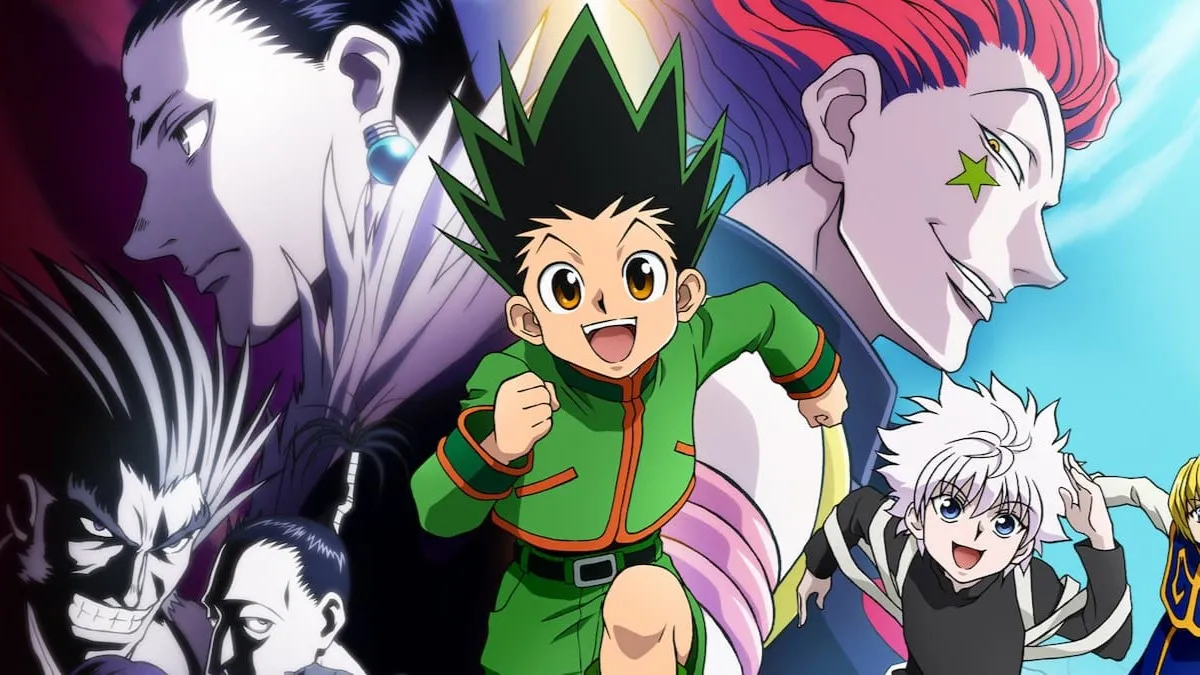
The 1999 Hunter x Hunter adaptation is a separate production with its own identity. It has 62 TV episodes, and its tone can feel more grounded and moody compared to the cleaner, brighter look of 2011. Some fans prefer the 1999 vibe for certain arcs because it leans into suspense and a slightly heavier atmosphere.
The complication is that the 1999 story does not “finish” its longer path through the manga within those 62 episodes. Instead, its continuation comes through OVA installments released later. These OVAs are not always presented consistently across services or DVD collections. One platform may list them as separate titles, while another folds them into a season-like structure, and some legal catalogs omit them entirely.
What the OVAs mean in practical terms
If you commit to the 1999 route, you are usually committing to tracking:
- The 62-episode TV series first
- Then the continuation OVAs in the correct order
This is where many new viewers get tripped up. They finish episode 62, search for “next episode,” and land on a different series or a mislabeled batch. If you are the kind of viewer who wants a clean start-to-finish experience with minimal catalog friction, the 2011 run is simply easier.
That said, the 1999 version is still worth watching for longtime fans. Treat it as an alternate interpretation with different pacing choices, some expanded moments, and a nostalgic late-90s aesthetic that can make certain scenes hit differently.
Arc breakdown and “seasons” vs episodes: why streaming platforms confuse everyone
A core reason people keep asking about episode counts is that streaming services label anime in wildly inconsistent ways. One service might break 148 episodes into seven “seasons,” while another calls them four “parts,” and a third lists everything as one continuous season with 148 entries. None of those labels are the “real” season structure in the way Western TV uses seasons. They are mostly packaging decisions.
The simplest way to think about the 2011 structure
The 2011 adaptation is best understood as a single 148-episode run divided into major story arcs. Those arcs function like seasons emotionally, but they are not always aligned with how platforms group episodes.
Why this matters for watch progress
If you are tracking your progress by “Season 3, Episode 12,” you may not be describing the same moment as another viewer on a different service. That becomes frustrating when you are trying to avoid spoilers, follow arc guides, or jump back in after a break.
A practical tracking method
Use one of these instead:
- Episode number (absolute): “I’m on episode 76.”
- Arc name plus rough range: “I’m in the Greed Island arc, mid-way.”
- Major event marker: “Nen training is fully underway.”
This is also why manga readers and anime-only viewers sometimes talk past each other. The manga uses chapters, while the anime uses episodes, and streaming services add their own “season” overlays. If you keep your tracking anchored to episode numbers and arc names, you will always be able to reorient quickly, regardless of platform labeling.
Canon, filler, and recap: what you can safely skip without missing plot
If your goal is to experience Hunter x Hunter efficiently, you are asking the right question: how much of it is canon, and how much is filler? The 2011 adaptation is famous for being relatively faithful, which is great news for viewers who dislike long filler detours.
In general, Hunter x Hunter (2011) is heavily canon-focused, meaning most episodes matter, and “skip lists” are shorter than for many long-running shonen anime. That said, there are still a few categories of content that can feel skippable depending on your tolerance for pacing:
Recap-heavy openings and re-explanations
Some episodes include extended recaps, repeated exposition, or slower pacing that reinforces rules of Nen or reiterates goals. This is not “filler” in the strict sense, but it can feel repetitive when binge-watching.
Transitional episodes
Arc transitions sometimes include travel, regrouping, or setup segments that are important emotionally but lighter on action. If you skip too aggressively, you can miss character motivation, strategy setup, and subtle relationship shifts.
The safest “skip strategy”
Instead of skipping whole episodes, consider:
- Skipping repeated recaps within an episode (especially if you are binging)
- Watching at a slightly faster playback speed for slower segments
- Using arc-based viewing to maintain momentum
The 1999 adaptation, by contrast, can feel more “expanded” in places, and the OVA structure can create pacing quirks. If you are filler-sensitive, start with 2011. If you are atmosphere-sensitive and enjoy lingering character moments, 1999 can be rewarding, but it requires more patience and better tracking.
5 surprising facts about Hunter x Hunter’s episode count and pacing
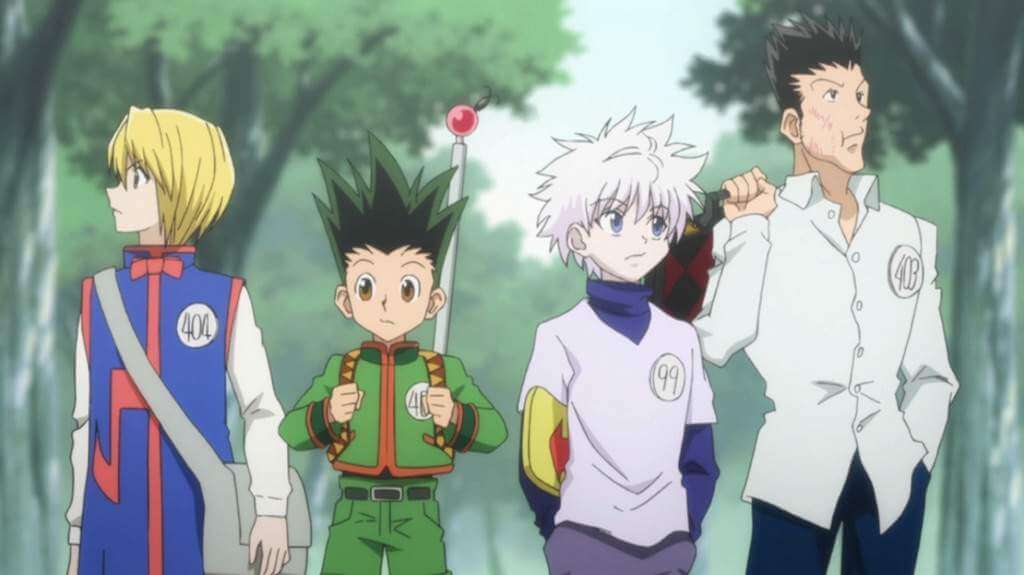
Hunter x Hunter’s episode total looks simple on paper, but the viewing experience has a few surprises that explain why fans keep debating it. Here are five facts that often catch new viewers off guard.
1) The “real” answer changes depending on what you mean by “Hunter x Hunter”
Most people mean 148 episodes (2011). Some mean “all animated Hunter x Hunter ever,” which pulls in 62 episodes (1999) plus OVAs. The question is easy, but the intent varies.
2) The 2011 series is a remake and a continuation of the story
The 2011 version retells early material with modern pacing and then pushes far deeper. That makes it feel like a single definitive run rather than “just a remake,” which is why it dominates the conversation.
3) The longest stretch feels like multiple seasons, even though it’s one continuous run
The show contains arcs with very different tones: exam adventure, underworld suspense, game-like training, and large-scale conflict. The emotional reset between arcs makes the series feel longer than 148 episodes.
4) The anime ending is a stopping point, not a full franchise finale
Episode 148 lands at a natural thematic wrap-up, but it does not adapt everything from the manga. That creates the illusion of completeness while still leaving story beyond the anime.
5) Episode labeling online can be misleading because OVAs get merged or excluded
Depending on region and service, OVAs may be presented as seasons, specials, or separate shows. That is why two people can both be “right” while citing different totals.
If you want to avoid catalog confusion entirely, the ComicK team’s simplest rule is: watch 2011 (148 episodes) first, then treat 1999 and OVAs as optional bonus content.
Best watch order for new fans and completionists
The best watch order depends on your goal: cleanest experience, fullest experience, or most nostalgic experience. Here are the paths that work in real life.
For most viewers (clean, modern, minimal friction)
- Hunter x Hunter (2011) from episode 1 to episode 148
- If you want more, continue with the manga after the anime endpoint (more on that below)
This route is the least confusing. It aligns with the most common episode references online, the most widely discussed arc breakdowns, and the easiest streaming availability.
For completionists who want to compare interpretations
- Hunter x Hunter (2011) first (so you understand the full animated scope quickly)
- Then watch Hunter x Hunter (1999) as an alternate take
- Then the 1999 OVAs in order as a continuation of that version’s path
This approach prevents the 1999 OVA labeling from derailing your first experience. It also makes it easier to appreciate differences in direction, tone, and pacing.
For fans chasing the vintage aesthetic first
If you strongly prefer late-90s anime style and slower mood-driven pacing, you can start with 1999, but be prepared to:
- Track the OVAs deliberately
- Expect differences in presentation and pacing
- Accept that it is not the easiest “plug-and-play” path
Whichever route you choose, stick to episode numbers rather than “season numbers” whenever you discuss progress with friends, forums, or watch guides. It will save you from spoilers and from mismatched platform packaging.
Where the anime ends and what to do after episode 148
A common follow-up to episode count is: “Is Hunter x Hunter finished?” The most accurate way to put it is this: the 2011 anime ends at episode 148, but the story continues in the manga. The anime provides a strong stopping point that resolves major emotional threads, yet it does not serve as a complete adaptation of every arc that exists on the page.
What you should expect after the anime
After the anime endpoint, the story expands into material that explores larger world-building, power politics, and new goals for certain characters. The tone can shift again, leaning into complex systems, faction dynamics, and long-form setup.
Should you switch to the manga immediately?
If you loved the show for:
- Strategy-heavy Nen battles
- Moral complexity
- Long-term character consequences
…then yes, the manga continuation is likely to work for you.
If you loved the show primarily for:
- The core Gon and Killua adventure energy
- The early arc sense of discovery
…you may still enjoy the manga, but you should go in expecting a different rhythm.
A practical transition tip
When you move from anime to manga, do not try to “speed-run” just to reach new plot points. Hunter x Hunter’s later material rewards careful reading because the information density increases: rules, factions, motivations, and consequences layer on top of each other. Many fans find that taking it slower actually feels more like the anime, because you give the story room to breathe.
Streaming, sub vs dub, and why your platform still shows the same episode total
Another quiet source of confusion is the assumption that different regions have different episode totals. For Hunter x Hunter (2011), the core number stays stable: 148 episodes. What changes is how those episodes are presented.
Common platform differences you may see
- Season splitting: The same 148 episodes are divided into multiple “seasons” for navigation.
- Specials labeling: Recap items or extras may appear as separate entries in some catalogs.
- Language availability: Subbed and dubbed versions may arrive at different times, or be separated into different listings, making it look like one version has fewer episodes.
Sub vs dub: what actually changes
The episode count does not change, but the experience can:
- Dub phrasing may slightly alter the feel of certain jokes or emotional beats.
- Character names and terminology remain consistent overall, but the delivery can change tone.
- If you are comparing scenes across versions, always reference episode number + timestamp to avoid mismatches caused by recap placement.
If you are tracking alongside a guide
Use an episode list that is built around the original numbering rather than a platform’s seasonal packaging. Many fans keep a simple checklist or tracker while watching. ComicK readers, in particular, often prefer a straightforward “episode number plus arc name” tracker because it remains stable no matter where you stream.
FAQ: Hunter x Hunter episode count and watching questions
1) How many episodes does Hunter x Hunter (2011) have?
Hunter x Hunter (2011) has 148 episodes total.
2) How many episodes does the 1999 Hunter x Hunter have?
Hunter x Hunter (1999) has 62 episodes, with the story continuing via OVAs.
3) Is Hunter x Hunter finished after 148 episodes?
The 2011 anime ends at episode 148, but it is not the end of the entire story. The manga continues beyond the anime endpoint.
4) Does Hunter x Hunter have filler episodes?
The 2011 series is mostly canon-focused with minimal filler. Some parts feel slower due to recap or pacing, but most episodes matter.
5) Do streaming services change the total number of episodes?
No. Services may split the show into seasons differently, but the core total for 2011 remains 148 episodes.
6) Should I watch Hunter x Hunter (1999) or (2011) first?
Most viewers should start with 2011 for the cleanest, most complete anime run. Watch 1999 later if you want an alternate tone and pacing.
7) Are the OVAs required if I watch the 2011 version?
No. The OVAs are tied to the 1999 adaptation’s continuation and are not required for the 2011 experience.
8) Are the Hunter x Hunter movies necessary?
They are generally optional. They do not replace core arcs, and most fans treat them as extra content rather than essential viewing.
9) Why do people give different episode counts online?
Some count only the 2011 run (148), while others include 1999 (62) plus OVAs, and platform labeling can merge or separate OVAs inconsistently.
10) What is the best way to track my progress without spoilers?
Track by absolute episode number and arc name instead of “Season X” labels, since streaming platforms package seasons differently.
Conclusion: the clear answer, plus the best way to use it
If you came here for a single number, here it is again: how many episodes does hunter x hunter have in the modern, definitive anime run? Hunter x Hunter (2011) has 148 episodes. That is the count most viewers mean, the version most guides reference, and the simplest place to begin.
If you want the fuller picture, remember that Hunter x Hunter (1999) has 62 episodes and continues through OVAs, which is why listings and totals sometimes conflict. The practical takeaway is to choose your path based on your viewing style: pick 2011 for the cleanest start-to-finish anime experience, and treat 1999 plus OVAs as optional deep-dive material once you are already invested.
Finally, do not let “season” labels mislead you. Anchor your progress to episode numbers and arc names, and you will stay oriented on any platform. That is the same approach the ComicK team recommends for avoiding confusion, spoilers, and mismatched episode references while you watch.
You may also like:
Chainsaw Man Characters: 10 Unforgettable Figures That Will Leave You Speechless
Goodnight Punpun Characters: 7 Deeply Complex Figures and Their Impact on the Story
Is Chainsaw Man Manga Over? 10 Shocking Facts You Need to Know
