
Madhouse produced the 2011 adaptation (148 episodes), while Nippon Animation produced the 1999 TV series (62 episodes, plus OVAs in many listings).
At ComicK, our team cross-checks studio credits, official episode numbering, and common streaming “season” splits so you can avoid version mix-ups and track the remake timeline accurately. Next, you’ll get a clear 1999 vs 2011 breakdown, the real trade-offs remakes create, and the simplest watch approach to start with confidence.
What studio had hunter x hunter anime: the definitive studio breakdown
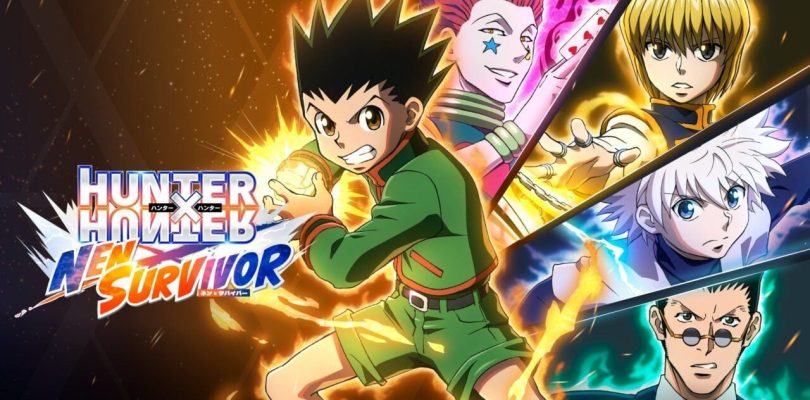
Let’s pin down the production facts before we talk style, pacing, or remake debates. There are two core TV adaptations of Hunter x Hunter, and each is tied to a different studio.
Hunter x Hunter (1999) was produced by Nippon Animation. It aired as a TV series with 62 episodes, then extended its storyline through OVA releases that many databases list separately.
In practice, this means a viewer can finish the 62-episode TV run and still have “more 1999 Hunter x Hunter” left, but only if they can locate the OVAs in the correct order. This is why older listings vary so widely: some platforms bundle OVAs as seasons, some label them as specials, and others do not carry them at all.
Hunter x Hunter (2011) was produced by Madhouse. It ran as a single, modern adaptation for 148 episodes, widely treated as the definitive entry point for new viewers because it is easier to follow from episode 1 through a clean stopping point.
This version is commonly split into multiple “seasons” on streaming services for navigation, but those season labels are platform decisions, not production seasons.
If you take only one rule from this section: when discussing Hunter x Hunter, always specify 1999 vs 2011, then reference episode numbers, not season numbers. That habit prevents nearly every “wrong version” and “missing episodes” problem.
Why Hunter x Hunter was remade: the business and creative logic behind it
Anime remakes are rarely commissioned because the original adaptation is “bad.” Most are greenlit because the market, distribution, and franchise goals changed. Hunter x Hunter’s remake reflects how dramatically the anime landscape shifted between the late 1990s and the early 2010s.
In the 1999 era, weekly TV anime operated under stricter broadcast standards, different approaches to violence and tone, and a release ecosystem where international accessibility was inconsistent.
Many viewers discovered shows through local TV blocks, VHS, or later DVD releases. That system could elevate a title, but it also made long-term, globally synchronized planning harder.
By 2011, the industry had matured into a more globally aware model where streaming catalogs, licensing strategy, and consistent episode availability mattered. A remake offered multiple advantages: it reintroduced the story from the beginning for a new generation, improved entry-level accessibility, and aligned the franchise with modern production and distribution expectations.
It also gave the production committee a chance to map a longer arc structure from early premise through later, heavier material without relying on OVAs that newer fans might never find.
Creatively, Hunter x Hunter is unusually shape-shifting. It begins like an adventurous shonen journey, then pivots into exam survival, criminal underworld tension, strategic battles driven by rules, and psychologically intense arcs that challenge simple hero narratives.
A remake allows the team to set consistent character designs, pacing philosophy, and tonal control from the first episode, so those genre pivots feel like deliberate escalation rather than abrupt reinvention.
A remake is still a trade-off, but the logic for attempting it is strong: new audience, cleaner access, modern workflow, and a chance to produce a single “default” adaptation that fans can recommend without caveats.
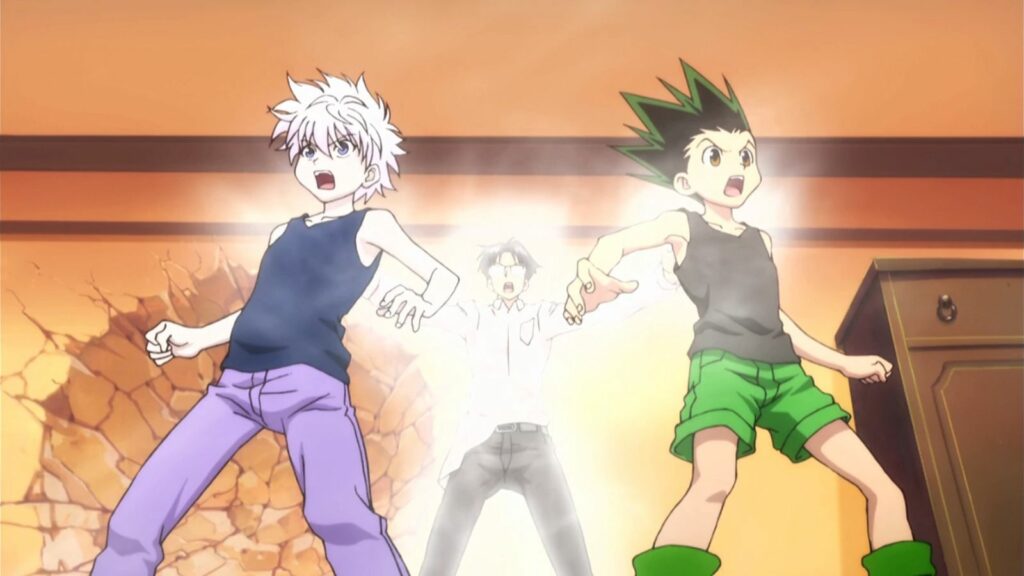
What Madhouse changed in 2011: modern readability, consistent pacing, and scale
Madhouse’s 2011 adaptation is often recommended first because it is built for long-form clarity. Over 148 episodes, the production aims to keep character designs readable, action choreography coherent, and story transitions understandable even when the series shifts genres.
For a show where the power system (Nen) turns fights into strategic puzzles, clarity matters. Viewers need to follow positioning, timing, and intent, not just the final impact.
Another practical advantage is pacing consistency. The 2011 run is not free of slower stretches, but it generally avoids the “stalling” feel that can plague long shonen. Many episodes are structured to maintain momentum while still delivering necessary exposition.
When the narrative becomes more complex, the direction tends to emphasize explanation through scenes and decisions rather than pure narration. That supports binge watching and reduces the need for external guides, which is a major reason the 2011 version became the mainstream default.
Visually, the 2011 adaptation reflects modern TV anime standards: cleaner compositing, sharper linework, and a color design that can swing between bright adventure and darker tension without losing legibility.
Soundtrack placement and voice direction also shape how audiences interpret the same events. Even when plot beats match the manga, the emotional tone can differ depending on music cues and performance intensity.
At ComicK, the most consistent feedback from new fans is that the 2011 series is easier to “stay oriented in,” especially once the story enters arcs with higher information density, more factions, and more rule-based conflict.
What Nippon Animation delivered in 1999: atmosphere, tension, and a different emotional rhythm
The 1999 Hunter x Hunter adaptation has a distinct identity that many fans value precisely because it is not optimized for modern binge culture. Nippon Animation’s version often feels moodier, with more lingering shots, heavier shadows, and a pacing rhythm that can emphasize suspense. Where the 2011 series tends to prioritize readability and forward motion, the 1999 version can prioritize emotional texture and tension.
This is especially noticeable early on. Hunter x Hunter starts with adventure energy, but danger is present from the beginning. The 1999 adaptation often frames that danger with a more grounded tone.
Some viewers prefer this approach because it makes the world feel harsher sooner, reducing the gap between the early “journey” vibe and the later, more morally complex arcs that define the franchise’s reputation.
Another reason 1999 remains relevant is comparative viewing. Watching the same characters under different direction choices reveals how much anime interpretation matters.
Music, shot selection, and voice performance can shift a character from playful to unsettling, or from confident to fragile, even when dialogue is similar.
The trade-off is accessibility. The 1999 TV run is 62 episodes, but the storyline continues through OVAs that are frequently listed separately or inconsistently across services. That packaging issue can interrupt the viewing experience, particularly for newcomers who expect a single continuous run.
If you are willing to track OVAs carefully, the 1999 version can be rewarding. If you want a frictionless entry, 2011 remains the simplest starting point.
7 brutal truths about anime remakes (and why Hunter x Hunter proves each one)

Anime remakes generate hype because they promise improvement. The reality is more complicated. Hunter x Hunter illustrates seven truths that apply to most remakes, especially for long-running, high-profile properties.
1) A remake is a redesign, not a repair
Remakes do not “correct” the original so much as rebuild it with new priorities. You gain some strengths and lose others.
2) Modern animation can reduce mood
Cleaner visuals improve clarity, but they can also soften grit and atmosphere if the older version leaned into shadow, grain, or slower tension.
3) Faithfulness can feel faster
A remake that aligns tightly with manga pacing can feel brisk, but it may also feel less contemplative if you loved extended quiet moments.
4) Consistency often beats peak experimentation
Long adaptations aim for stable quality across dozens of episodes. That can limit stylistic risks that create memorable one-off highlights.
5) Voice direction changes character perception
Two performances can make the same character feel charming, terrifying, comedic, or tragic. Remakes often reset that emotional “read.”
6) Platform packaging creates false disagreements
Season labels, OVA listings, and dub availability make fans argue about episode counts when they are actually arguing about catalog structure.
7) Remakes become the default, originals become “for enthusiasts”
Once a remake dominates recommendations, the original is reclassified as niche, even if it still excels in specific arcs or tones.
If you understand these truths, you can evaluate Hunter x Hunter’s two versions without falling into the trap of declaring one objectively superior. They are different solutions to different era constraints.
Coverage and watch order: which version to start and how to avoid common traps
Most viewers should start with Hunter x Hunter (2011) for a simple reason: it is the easiest complete experience to track. You watch from episode 1 to episode 148 with minimal catalog confusion.
You do not need to hunt down OVAs, cross-check release orders, or interpret inconsistent “season” splits across platforms. It is the most common recommendation for first-time fans, and it aligns with most arc discussions in the community.
If you are curious about the original adaptation, treat Hunter x Hunter (1999) as an alternate lens rather than a required prerequisite. Watch its 62-episode TV run when you already know the world and want to see a different emotional rhythm.
Then, if you want the continuation, locate the OVAs in the correct order and treat them like add-on parts, not like “Season 2” in the Western TV sense.
A few beginner mistakes to avoid:
- Do not mix 1999 and 2011 mid-watch. You will create continuity whiplash and emotional pacing confusion.
- Do not rely on streaming season labels. Track by episode number and arc name.
- Do not assume the anime adapts everything. The 2011 version ends at a strong stopping point, but the broader story continues in the manga.
If you want a clean personal tracker, note three fields: version (1999 or 2011), episode number, arc name. This method stays stable no matter which streaming service you use, and it prevents accidental spoilers when you discuss your progress with friends.
Streaming seasons, licensing, sub vs dub: why the internet keeps disagreeing
A large percentage of Hunter x Hunter confusion is not about the show itself. It is about how the show is packaged and localized. Streaming services often split a single continuous run into multiple “seasons” for navigation, regional licensing, or contract reasons.
That is why one platform might label 2011 as several seasons while another lists it as one long season of 148 episodes.
Dub and sub availability can also distort perception. Some catalogs release dubs later, or separate dubbed and subbed versions into different entries. This can make viewers think episodes are missing, when the reality is that the platform is showing incomplete language availability.
Older titles face additional complications: rights windows, remastered Blu-ray editions, and inconsistent OVA handling. OVAs might appear as a separate title, as specials, or not appear at all, depending on region.
That is why “1999 episode counts” vary in casual conversation. People are often comparing different catalog presentations rather than different underlying productions.
If you want to stay accurate:
- For the 2011 series, think “148 episodes total,” then ignore season labels.
- For the 1999 series, think “62 TV episodes,” then look for OVAs as separate continuations.
- When discussing progress, use episode numbers and arc names, not streaming season numbers.
ComicK readers often use this method because it keeps recommendations and internal links consistent, especially when audiences watch on different services with different packaging.
FAQ: studios, remakes, and episode counts
1) What studio had Hunter x Hunter anime in 2011?
Madhouse produced the 2011 Hunter x Hunter adaptation.
2) What studio made the 1999 Hunter x Hunter anime?
Nippon Animation produced the 1999 TV adaptation.
3) How many episodes are in Hunter x Hunter (2011)?
Hunter x Hunter (2011) has 148 episodes.
4) How many episodes are in Hunter x Hunter (1999)?
Hunter x Hunter (1999) has 62 TV episodes, with additional OVAs depending on listing.
5) Are the 1999 OVAs part of the same adaptation?
Yes, they are commonly treated as continuations of the 1999 production line.
6) Is the 2011 version a sequel to the 1999 version?
No. The 2011 version is a new adaptation that restarts the story from the beginning.
7) Which version is better for new viewers?
Most new viewers should start with the 2011 adaptation because it is easier to track and more widely available.
8) Do remakes always have better animation?
Not always. Remakes often look cleaner, but “better” depends on direction, mood, and priorities.
9) Why do season counts differ between platforms?
Platforms split episodes differently for navigation and licensing, which changes season labels but not the total episode count.
10) Do the Hunter x Hunter movies replace any story arcs?
No. Movies are generally optional and do not replace the main arc progression.
Conclusion: the studio answer and the remake reality you should remember
Here is the production truth in one clean summary: Hunter x Hunter has two main TV adaptations with different episode totals and different studios. The 2011 anime is 148 episodes produced by Madhouse.
The 1999 TV anime is 62 episodes produced by Nippon Animation, with additional OVAs often listed separately. If your core question is what studio had hunter x hunter anime, those are the names that matter, and they explain why the two versions feel so different.
More importantly, those studio differences reflect the real nature of anime remakes. Remakes are not universal upgrades. They are re-interpretations shaped by era constraints, production committee goals, broadcast standards, and the intended viewing environment.
Madhouse’s 2011 approach emphasizes modern readability, consistent pacing, and a straightforward watch path. Nippon Animation’s 1999 approach emphasizes mood, tension, and a vintage rhythm that some viewers still prefer for specific arcs.
If you want the simplest, most reliable starting point, begin with 2011 and track by episode number, not streaming seasons. If you want the richer comparison, watch 1999 later as an alternate lens and treat OVAs as add-ons rather than missing seasons. That mindset turns the remake debate from frustration into an informed choice.
You may also like:
Chainsaw Man Characters: 10 Unforgettable Figures That Will Leave You Speechless
How Many Episodes Does Hunter x Hunter Have? 5 Surprising Facts You Need to Know!
What Is Hunter x Hunter About? 11 Mind-Blowing Facts New Fans Must Know
