
How Do All the Upper Moons Laugh in Demon Slayer? The Upper Moons in Demon Slayer are infamous not only for their immense power but also for their terrifying and unique laughs. These laughs reflect each character’s personality, motivations, and twisted nature. From Muzan Kibutsuji’s cold chuckle to Akaza’s battle-hungry boisterousness, each laugh reveals a deeper aspect of these demons.
At ComicK, we explore the psychological depth of these characters, shedding light on how their laughter adds to their terrifying presence. Read on as we break down 8 spine-tingling laughs that define these Upper Moons, making them some of the most memorable and haunting figures in anime.
1. The Sinister Laughter of Muzan Kibutsuji: The Demon King’s Dark Chime
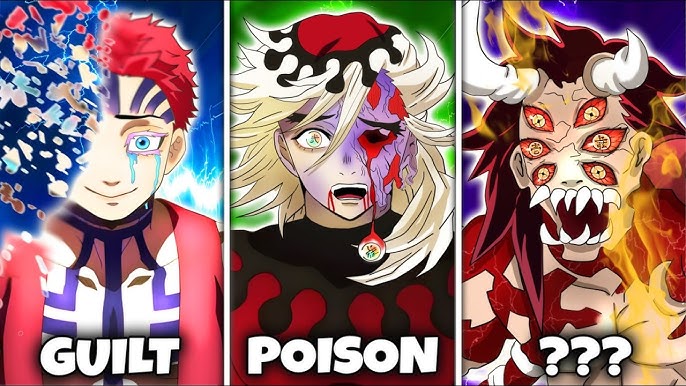
Muzan Kibutsuji is the leader of the Twelve Kizuki, a being whose ambition for absolute power is only matched by his cruelty. Muzan’s laugh is the most sinister and rare among the Upper Moons. It is not a laugh of joy, but rather a quiet, dark chuckle that signals his dominance over both demons and humans. His laughter echoes a sense of complete control and the overwhelming nature of his existence.
The Sound of Control
Muzan’s laugh is rarely heard during moments of celebration or happiness; instead, it emerges when he is asserting his power or when he sees the fruits of his manipulation. It is an eerie sound that comes across as a dark chime—soft yet powerful, calculated yet chilling. When Muzan laughs, it signifies that he has succeeded in manipulating the events around him or that he is reveling in the suffering of those below him.
Muzan does not laugh out of pleasure; instead, his laugh underscores his chilling sense of superiority. It is almost never loud or jarring, instead coming across as composed and almost rehearsed. This quiet laughter reinforces Muzan’s image as a cold, calculating figure who is always in control. Muzan’s laugh stands as a symbol of terror, a constant reminder that his plans are unfolding exactly as he wishes.
Impact on Fans
When Muzan laughs, fans know that something sinister is afoot. His laugh is a harbinger of doom, a signal that something terrible is about to happen. Fans who hear Muzan’s laughter immediately recognize the weight of his presence—he is never amused, but always in complete control, guiding events towards his will. This makes his laugh one of the most disturbing in the series, as it often comes before the darkest and most twisted moments.
Muzan’s Laughter Symbolizes His Power and Cruelty
Muzan’s laughter is not just an oddity; it reflects his god-like power and his unwavering cruelty. As the king of demons, Muzan views others as mere pawns in his long game for ultimate control over humanity and the world. His laughter is devoid of empathy, and every chuckle further emphasizes his status as an invincible figure—someone who can manipulate and destroy without remorse. Muzan’s laughter is chilling not only because of its coldness but because it signals that no one, not even the Upper Moons, are beyond his reach.
2. Upper Moon One: Kokushibo’s Deep and Echoing Laugh – How Do All the Upper Moons Laugh in Demon Slayer
Kokushibo is the first and most powerful of the Upper Moons. His laugh, deep and resonant, reflects both his immense power and the regret he carries for abandoning his humanity. Kokushibo is a tragic figure, once a human swordsman, who became a demon in his pursuit of immortality and strength. His laugh embodies this tragic duality, balancing between pride and sorrow.
The Regretful Laugh of a Fallen Warrior
Kokushibo’s laugh is not loud or boisterous like some of the other Upper Moons; instead, it is a low, almost mournful sound. It is a reflection of his inner conflict—the sorrow he feels for losing his human emotions and the pride he has in his abilities. While his laugh often carries a sense of authority and power, there is an unmistakable tinge of regret that adds depth to his character.
Unlike other Upper Moons, Kokushibo’s laugh feels less calculated and more tortured. It’s as if every laugh is a reminder of the person he once was and the decisions that led him to forsake humanity in exchange for eternal life. His deep laugh echoes through scenes of conflict and inner turmoil, resonating with fans who can sense the emotional struggle within this demon.
Impact on Fans
Fans of Demon Slayer are often struck by the tragic nature of Kokushibo’s character. His laugh is an emotional reminder of the consequences of his choice to become a demon. Unlike Muzan’s chilling, controlled laugh, Kokushibo’s laugh reflects a sense of lost humanity. It is the sound of a warrior who has achieved greatness but at the cost of everything that once mattered to him.
Kokushibo’s Laugh Reflects His Tragic Duality
Kokushibo’s laugh is a constant reminder of the tragic duality that defines him. His deep voice reflects the stoic nature of a warrior, while his regretful laugh reminds us that he is still haunted by his past. This complexity makes Kokushibo one of the most compelling characters in Demon Slayer—a powerful demon who cannot escape the shadows of his former self.
3. Upper Moon Two: Doma’s Playful, Yet Sinister Giggle
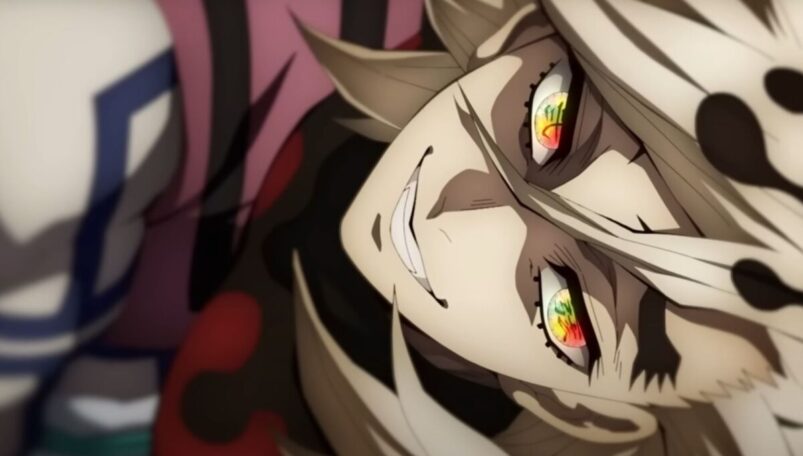
Doma, the second Upper Moon, is perhaps the most unsettling of all the Upper Moons. His appearance is serene and angelic, but beneath this facade lies a sadistic and detached demon. Doma’s laugh is high-pitched, childlike, and playful, but it is also deeply sinister and unsettling. It reflects his disconnection from human emotions and his complete disregard for the suffering of others.
The Laugh of a Sadistic Jester
Doma’s laugh is dissonant with the violence he inflicts. While other demons may laugh in moments of triumph or satisfaction, Doma’s laugh often emerges when he is mocking his victims or relishing their fear. It is a laugh that has no connection to joy or happiness—only to a cruel and twisted sense of amusement. His high-pitched giggles seem to ring through the air, almost like the laughter of a twisted jester, delighting in the suffering of those around him.
Doma’s laugh feels as though it is completely divorced from reality—he laughs not because he finds something truly funny, but because he is incapable of truly understanding the gravity of his actions. He treats human life as expendable, a fact that his laugh fully embodies.
Impact on Fans
Doma’s laugh is one of the most chilling in Demon Slayer because it signals his deep detachment from humanity. Fans are immediately put on edge by his unsettling giggles, which seem so out of place in the terrifying world of demons. His laughter emphasizes his lack of empathy and the warped nature of his character. Every time Doma laughs, fans are reminded that he is an unstoppable force, completely unconcerned with the suffering of others.
Doma’s Laughter Highlights His Disconnection from Humanity
Doma’s laugh is a symbol of his disconnection from the human experience. Unlike the other demons, whose laughs may carry hints of emotion, Doma’s laughter is devoid of any warmth. It makes him one of the most disturbing villains in Demon Slayer, as his laughter comes from a mind that has completely severed ties with compassion and understanding. His ability to laugh so freely in the face of death shows just how far gone he is.
4. Upper Moon Three: Akaza’s Loud, Boisterous Laughter
Akaza, the third Upper Moon, is the epitome of battle obsession. His laugh is loud, boisterous, and full of energy, reflecting his deep love for combat and fighting. Unlike the other Upper Moons, Akaza’s laugh is often heard when he is engaging in battle, thoroughly enjoying the clash of power.
The Laugh of a Battle-Obsessed Demon
Akaza’s laugh is a reflection of his unwavering passion for combat. When Akaza laughs, it’s never out of malice or cruelty—instead, it is the sound of someone enjoying the thrill of a good fight. His boisterous laughter carries the energy of someone who is constantly seeking the challenge of combat, finding exhilaration in every battle. Unlike the other demons who laugh to intimidate or mock, Akaza laughs because he is genuinely having fun.
Impact on Fans
Fans who hear Akaza’s laugh are struck by the raw enthusiasm it conveys. His laugh signals a lack of fear and a desire for constant conflict. While the other Upper Moons may laugh with sadistic glee, Akaza’s laughter stands out because it is a genuine reflection of his personality—an insatiable need for battle and victory. His laugh is infectious in its energy, giving fans a sense of his relentless desire to fight.
Akaza’s Laugh Reflects His Unquenchable Hunger for Strength
Akaza’s laugh is a celebration of strength and the thrill of battle. His laughter symbolizes his core belief that the world is defined by strength, and his obsession with proving his superiority in combat drives everything he does. Akaza’s laugh makes it clear that he is not just a demon out for destruction—he is a warrior at heart, and every battle is another opportunity to prove his strength.
5. Upper Moon Four: Hantengu’s Shrill, Frantic Laughter
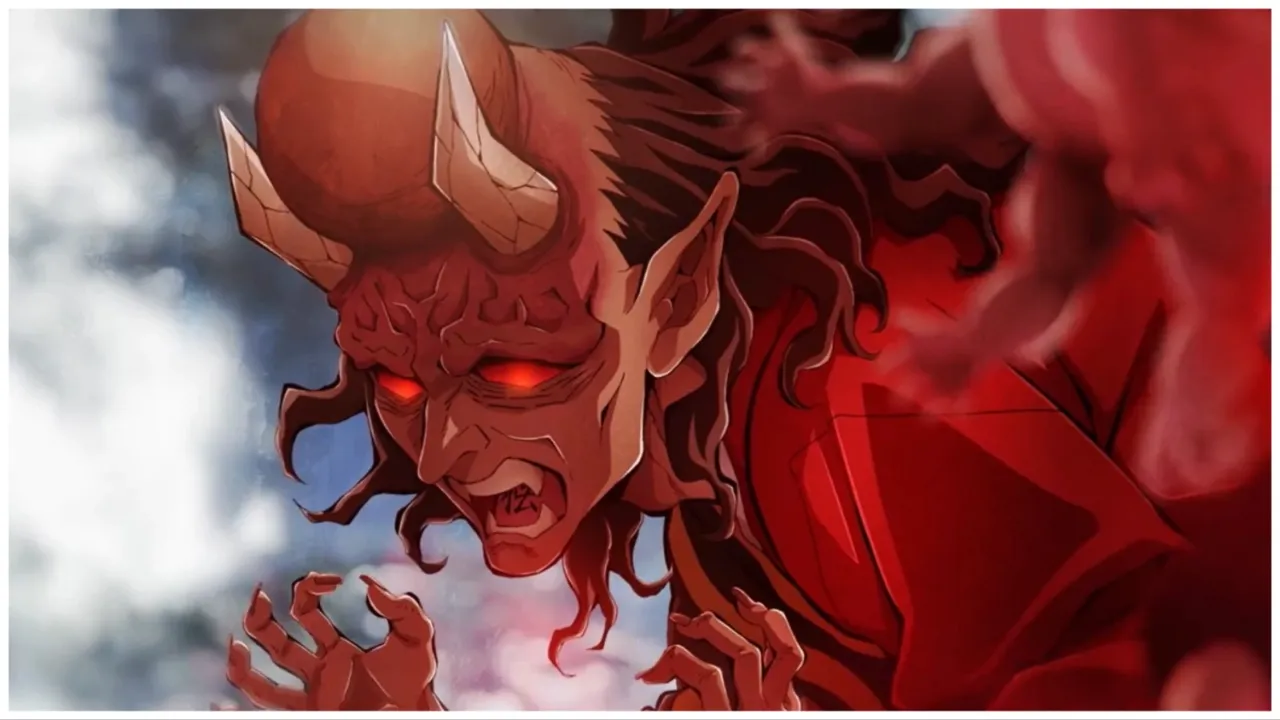
Hantengu, one of the more unique Upper Moons, is constantly on edge. His laugh is high-pitched, frantic, and shrill, often erupting in moments of panic or fear. Unlike the other Upper Moons, Hantengu’s laugh does not emerge from confidence or pleasure—it is a reflection of his unstable nature.
The Desperate Laugh of a Cowardly Demon
Hantengu’s laugh is not one of dominance—it is a laugh born of fear and instability. As one of the weaker Upper Moons, Hantengu’s laugh often comes when he is in a state of terror or panic. His laugh is unpredictable, a sign that he is constantly on the run from his fears. Unlike the other demons who revel in their power, Hantengu’s laugh highlights his insecurities and vulnerability.
Impact on Fans
Hantengu’s laugh is disturbing because it lacks the cold confidence of the other Upper Moons. Fans are put off by its inconsistency—it is a laugh born of desperation and cowardice, not power. His inability to control his fear makes his laugh stand out as the most unsettling, as it signals that even the most powerful demons can be reduced to mere shadows of fear.
Hantengu’s Laugh Reflects His Weakness
Unlike the other Upper Moons who draw strength from their laughter, Hantengu’s laugh underscores his weakness. His nervous, frantic giggles make him one of the most vulnerable characters in the Twelve Kizuki, despite his power. This stark contrast between his physical strength and emotional fragility makes his laugh all the more disturbing.
The Upper Moons’ Laughs Are Symbols of Terror and Power
The laughter of the Upper Moons in Demon Slayer is more than just an oddity—it is a critical part of their characterization. Each laugh reveals something about their twisted nature, their motivations, and their fearsome powers. Whether it’s Muzan’s chilling chuckle, Kokushibo’s regretful laugh, or Doma’s unsettling giggle, these sounds serve to enhance the horror and depth of the characters.
Their laughter is not just a reflection of their evil nature; it is a manifestation of their internal struggles and desires. It shows that even the most terrifying of demons are complex beings, with desires and regrets that shape their actions.
As Demon Slayer continues to captivate audiences around the world, the Upper Moons’ laugh will remain one of the most distinctive and spine-chilling features of the series.
You may also like:
When Is Demon Slayer Season 6 Coming Out? 10 Powerful Reasons You Should Be Excited
When Was Demon Slayer Made? 5 Powerful Reasons It Became a Global Phenomenon
Who Is Channing Tatum Voicing in Demon Slayer? 5 Surprising Facts About His Role!
