
Yes, Misa Amane is ultimately understood to die, but the ending is presented differently by version: the anime strongly implies her death through its final imagery, while the manga doesn’t show it on-page and leaves her fate to implication and later official notes. In this ComicK guide, we break down the 5 brutal facts behind her final fate, using clear timeline context and canon-backed details to avoid manga vs anime mix-ups.
You’ll see exactly what happens, why the series handles her ending so coldly, and what most fans miss when they debate Misa’s fate. Let’s unpack it.
Does Misa Die in Death Note?
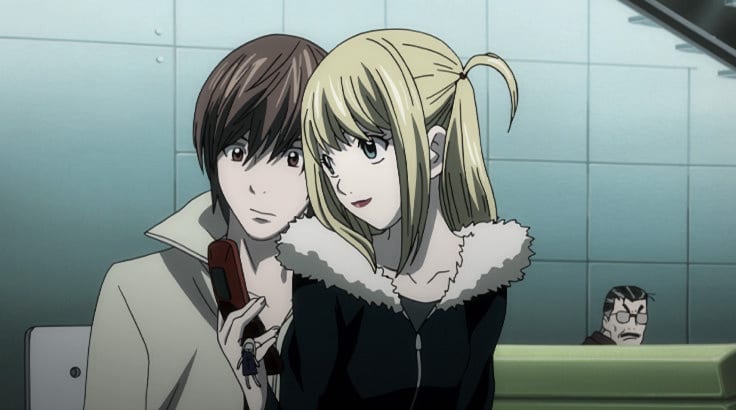
To avoid the most common fandom argument, here’s the clean split:
In the anime
Misa’s fate is heavily implied in the finale through a final scene staged with unmistakable “end-of-life” visual language. The anime does not show the act explicitly, but the implication is intentional.
In the manga
Misa’s death is not depicted. She disappears from the narrative before the end, and the manga prioritizes the closing mechanics of the Kira case. Later creator commentary and official profile-style notes are what push the consensus toward “she died, likely by suicide.”
So when someone asks does misa die in death note, the most accurate answer is:
- Yes, but the story presents it indirectly, and the anime is more explicit than the manga.
What Happens to Misa at the End
Misa’s ending feels confusing because Death Note treats her like two different things at different times:
- A major plot engine who changes the entire balance of power.
- A disposable piece once the endgame has started moving too fast to slow down.
That’s not an accident. It is a deliberate storytelling choice, and it is why her fate is still debated.
The anime’s final image
The anime chooses a final image that communicates isolation and finality: Misa alone, in a high place, positioned in a way that suggests a point of no return. Even if the show never shows her falling, the scene is framed so that many viewers experience it as confirmation.
The manga’s silent exit
The manga ends without returning to Misa for a full epilogue. You do not get a final “Misa chapter.” You get absence. And in Death Note, absence is often the point: the world keeps moving, even if someone’s life is collapsing off-screen.
The 5 Brutal Facts Fans Aren’t Ready For
These are the five realities that make Misa’s fate feel cruel, not just sad.
Fact: Misa does not get an on-page goodbye that matches her importance
Misa is not a side character. She is:
- The Second Kira
- A Shinigami Eyes user
- A celebrity with influence
- A strategic advantage that Light repeatedly depends on
And yet, she does not receive a clear, final on-page sendoff in the manga. For many readers, that feels like a betrayal of narrative investment.
But it also mirrors the way she is treated within the story’s power dynamics. Misa is central as long as she is useful. Once she stops being useful to the people driving the plot, the story stops pausing for her.
ComicK team share: This is one of the most unsettling truths about Death Note. It does not always reward emotional attachment with closure. Sometimes it leaves you with the same helplessness the characters would feel in that world.
Fact: The anime’s implication is so strong it functions like confirmation
The anime does not show Misa’s death directly, but it does something more manipulative in a psychological sense: it uses cinematic language that audiences have been trained to read as “this is the end.”
That language includes:
- Isolation: Misa is alone, with no supporting cast nearby.
- Stillness: the scene isn’t frantic, it’s quiet, which makes it feel final.
- Visual symbolism: placing a character at a dangerous edge is not neutral framing.
- Mood: the tone communicates mourning rather than suspense.
Death Note frequently avoids explicit statements when implication will land harder. This is one of those moments.
Fact: Later official commentary points to suicide after Light’s death
One reason this question never truly dies is that the manga ending itself is incomplete on this point. Many fans want “proof” inside the story panels, and the manga does not give it.
However, later creator commentary (often discussed in relation to guide-style materials) suggests the intended reading: after learning of Light’s death, Misa falls into despair and likely commits suicide.
This matters because it reframes her fate as internal collapse rather than external punishment. No one “takes her out” in a climactic scene. She unravels because the only thing she built her identity around is gone.
That is brutal, but it is consistent with who Misa is.
Fact: Misa repeatedly halves her lifespan for power and closeness
Even if you never calculate the numbers, Death Note makes the symbolism unmistakable: Misa is willing to trade her future away for certainty and proximity.
Misa makes the Shinigami Eyes deal more than once. Each time, she chooses immediate advantage over long-term life.
Here’s what that means narratively:
- Her love is not just emotional. It is transactional with her own lifespan.
- Her choices permanently shrink her possibility space.
- She becomes a character whose “later” is always being cut shorter.
This is one of the cruelest design elements in Death Note: the supernatural mechanics are not just powers, they are metaphors. Misa’s eyes are a metaphor for devotion that costs you your future.
Fact: Light never loves her the way she loves him, and her ending reflects that imbalance
If you want to understand why Misa’s ending feels so merciless, focus on one truth: their relationship is not mutual.
Misa’s devotion is absolute. Light’s “affection” is conditional and strategic. He treats her as:
- a tool
- a shield
- a source of leverage
- a controllable asset
Misa treats Light as:
- salvation
- destiny
- purpose
- the center of her life
When the person you built your identity around disappears, you don’t just lose love. You lose meaning.
That is why her ending isn’t simply “she’s sad.” It’s “she has no self left to stand on.”
Why the Manga and Anime Handle Misa’s Fate Differently
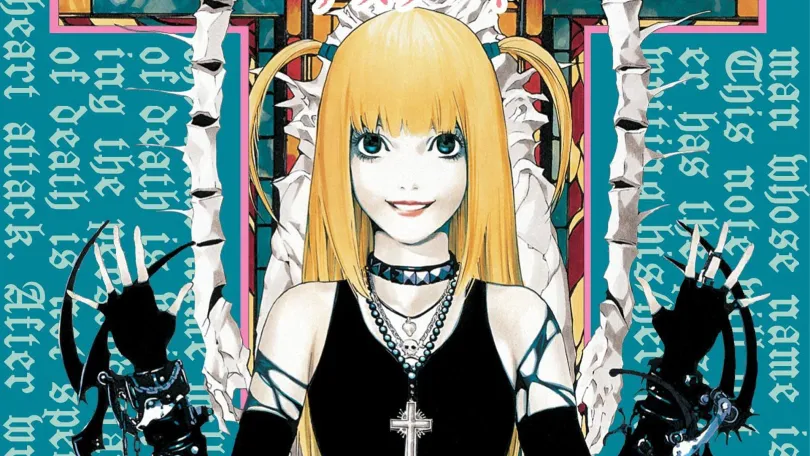
Death Note is famous for being precise and ruthless. So why the difference?
The manga ends like a closing trap
The manga’s final stretch is tightly engineered. It focuses on the mechanics of exposure, misdirection, and consequences. In that kind of ending, “checking in on everyone’s emotional afterlife” is not the priority.
Misa’s absence is the cost of that structure.
The anime gives viewers a final emotional punctuation mark
The anime, by contrast, understands what many viewers will ask: “What about Misa?” It answers that question emotionally with one final scene, without adding extra narrative machinery.
That difference reflects the strengths of the mediums:
- Manga can end with silence and let you stew.
- Anime often adds visual closure because it controls mood through sound and imagery.
What Misa’s Ending Is Actually Saying
If you strip away the debate about what is “confirmed,” Death Note is making a statement about devotion and power.
It’s not a romance tragedy in the usual sense
Misa’s arc does not end like a tragic love story where both people were genuinely in love and fate tore them apart.
It ends like a tragedy where:
- One person loved.
- One person used.
- The lover sacrificed everything.
- The user moved on until the system collapsed.
That is a different kind of heartbreak, because it forces you to confront a cruel question: was she loved at all, or was she only valuable?
It’s a story about identity collapse
Misa’s most defining trait is not her celebrity status or even the Death Note. It is her willingness to erase herself for someone else.
If you want the simplest interpretation of her fate:
- Misa’s ending is what happens when you outsource your identity to another person.
Death Note does not reward that. It punishes it, quietly.
It’s also a story about how the world discards people once they stop being useful
This is where Death Note gets uncomfortably realistic. The story repeatedly shows institutions, authorities, and even “geniuses” using people as pieces.
Misa is a piece.
And pieces are removed from the board when they no longer serve the strategy.
Common Misunderstandings About Misa’s Fate
A lot of fandom fighting comes from people using confident language for something the story presents indirectly.
Misunderstanding: “Misa dies on-screen in the anime”
Not exactly. The anime implies it strongly. It does not depict it explicitly.
Misunderstanding: “The manga confirms it in the final chapter”
No. The manga does not give a direct on-page confirmation.
Misunderstanding: “Someone writes Misa’s name in the Death Note”
There is no definitive moment in the main ending where we see someone force her death with the notebook.
Misunderstanding: “The lifespan concept proves she must die soon”
The lifespan system exists, but it does not function like a clean calculator for readers. What you can say with confidence is:
- Misa trades away lifespan multiple times.
- The story uses lifespan as a real force.
- The symbolism supports a shortened future.
But trying to compute an exact date from pure reader math usually creates more confusion than clarity.
Why Misa’s Ending Feels So Harsh Even If You Don’t Like Her
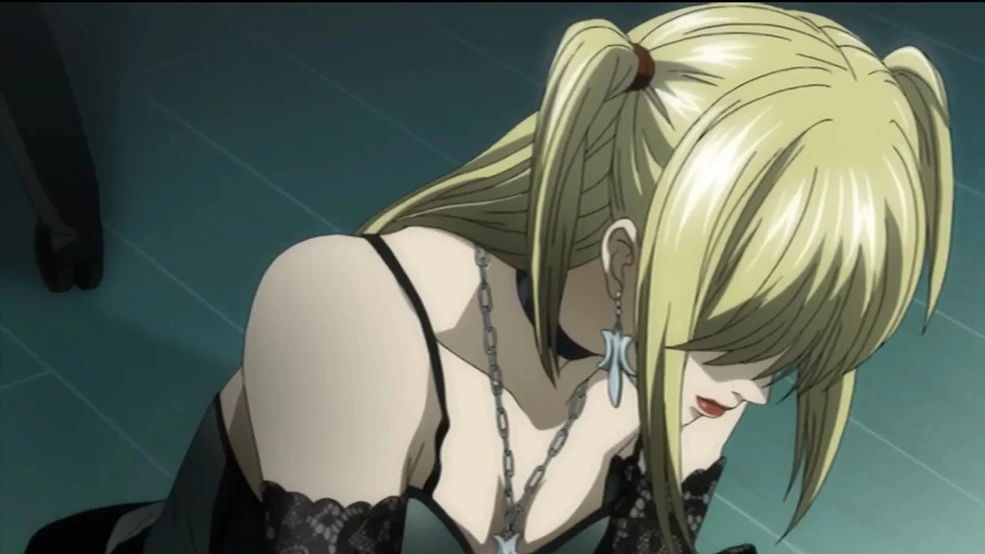
Some fans dislike Misa because:
- She makes reckless choices
- She enables Kira’s violence
- She’s emotionally volatile
- She can be manipulative in her own way
And yet, those same fans often admit her fate feels cruel.
That’s because Death Note doesn’t end her story with moral balance. It ends it with emotional emptiness.
She is punished by the consequences of her devotion, not by a heroic correction
Misa doesn’t get a redemption arc where she wakes up, breaks free, and rebuilds her life.
She also doesn’t get a villain’s punishment that feels narratively “clean.”
Instead, she gets the worst kind of ending: the one where the person she centered her world around disappears, and there’s nothing left.
The series refuses to comfort the audience
Many stories would give Misa a final scene that reframes her life:
- a moment of independence
- a new dream
- a quiet recovery
- a found family
Death Note doesn’t do that.
It leaves you with the uncomfortable truth that some people do not recover when their identity collapses.
A Spoiler-Friendly Breakdown of the Tragic Logic
If you already finished Death Note and want the blunt explanation of how the pieces fit:
- Misa attaches herself to Light so completely that her sense of self becomes secondary.
- She sacrifices lifespan for power and utility, repeatedly.
- She continues loving Light even when her memories are manipulated or removed.
- When Light dies, the one pillar holding her identity up disappears.
- The anime implies she ends her life.
- Later official commentary supports the interpretation that she does.
This is why the question “does misa die in death note” keeps coming up. The story wants you to feel the outcome even if it refuses to show it cleanly in every version.
What to Take Away as a Reader
If you’re reading Death Note for the first time, Misa’s ending can feel like an abrupt emotional cliff. But it also offers one of the series’ most brutal lessons.
Misa is a cautionary portrait, not a romantic heroine
She is written to be tragic. Her devotion is powerful, but it is also destructive. Death Note treats that destructiveness as inevitable.
The story’s cruelty is part of its honesty
Death Note is not interested in making you feel safe. It is interested in showing what happens when people treat other humans as means to an end.
Light’s worldview turns people into tools.
Misa is the character who suffers most from that worldview, because she volunteers to become a tool.
Her ending is meant to linger
The lack of a clean closure is not a mistake in the emotional sense. It is a design choice. It leaves you with discomfort, which is exactly what Death Note wants at the end: not comfort, but consequence.
FAQ
Does Misa die in Death Note?
Yes. The anime strongly implies she dies, and the manga leaves it off-page, with later official commentary supporting the interpretation that she dies after the main events.
Does Misa die in the Death Note anime?
The anime does not show it explicitly, but it heavily implies her death through her final scene and tone.
Does the Death Note manga show Misa’s death?
No. The manga does not depict her death on-page, and she is not given a direct final scene confirming it.
Is Misa’s death confirmed or implied?
In the anime, it’s implied very strongly. In the manga, it’s not shown, but later official commentary is often cited as confirmation of the intended outcome.
Why is Misa’s ending different in the manga and anime?
The manga ends with rapid endgame mechanics and does not return to every character for closure. The anime adds a final image to answer the emotional question many viewers will ask.
Does Misa die because someone writes her name in the Death Note?
There is no clear ending scene in the main story where we see someone write her name to cause her death.
How many times did Misa make the Shinigami Eyes deal?
Misa makes the Shinigami Eyes deal more than once, repeatedly trading away lifespan for power and certainty.
Does Misa know Light is dead?
Later commentary associated with the series often frames her collapse as happening after she learns of Light’s death, which fits the logic of her character.
Why do fans argue so much about Misa’s fate?
Because the manga does not show her death directly, while the anime uses implication, and different readers treat “implied” as either definitive or debatable.
What is the simplest way to describe Misa’s fate without overexplaining?
She survives past the main endgame events, but the story ultimately points toward her death, with the anime presenting the clearest implication.
You may also like:
Is Blue Lock Manga Finished? 4 Dramatic Clues Fans Keep Missing
How Old Is Near From Death Note? 7 Facts Fans Keep Missing
Who Does Channing Tatum Play in Demon Slayer? 5 Shocking Answers Fans Need Now
