
Does L die in Death Note? Yes, L dies in the canonical story, and in the anime it happens in Episode 25 (with the same outcome reflected in the original manga).
At ComicK, our editorial team cross-checks key plot facts against the official anime episode run and the manga’s primary story beats to keep spoiler queries accurate and consistent. Below, we break down the brutal mechanics behind L’s fate, why it happens the way it does, and what it changes for the rest of the series.
Quick Answer: Does L Die in Death Note?
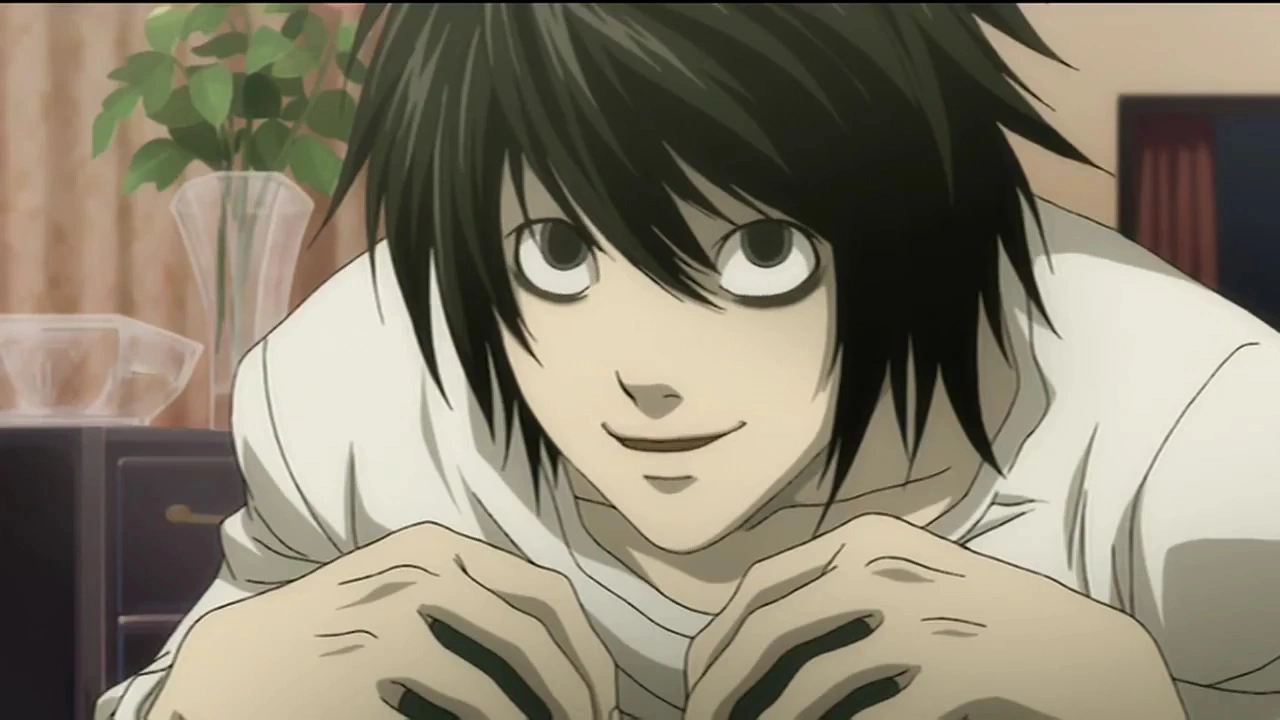
Yes. L dies in Death Note.
In the anime, his death occurs in Episode 25. In the manga, it occurs around Chapter 58.
That is the clear, canonical answer.
Now let’s talk about the five brutal facts that make this death sting more than most fans want to admit.
Brutal Fact One: L’s Death Is Not a “Maybe.” It’s Canon, Final, and Deliberately Inevitable
Some series tease a character’s death with ambiguity, reversals, or later reveals. Death Note does not play that game with L.
L’s death is:
- Canon in both the anime and manga.
- Narratively intentional, designed to break the audience’s assumptions.
- Final, meaning there is no later “surprise return” that restores the original dynamic.
Why this is brutal is simple: L is not just a fan-favorite. He is the backbone of the show’s signature tension. Many viewers start Death Note specifically for the intellectual duel between Light Yagami and L, and L’s presence defines the tone: clinical, suspicious, strategic, and relentless.
At ComicK, we often see new viewers ask if Death Note “stays as good” throughout. The honest reason this question exists is because L’s death marks a clear story pivot. Whether you love the second half or not, Death Note is never the same after L is gone, and the series wants you to feel that loss.
Brutal Fact Two: L Doesn’t Lose Because He’s Stupid. He Loses Because Death Note Is Not a Fair Game
A common fan coping mechanism is to explain L’s death with a simplified narrative:
- “L got careless.”
- “L made one bad move.”
- “L should’ve done X instead.”
The brutal truth is that L is playing a rigged game.
L’s entire approach is built on logic, probability, observation, and behavioral traps. That works brilliantly against human opponents. But the Death Note world includes:
- supernatural rules,
- memory manipulation,
- and non-human agents with their own incentives.
In other words, L is trying to win a chess match while his opponent has access to pieces that can occasionally ignore the board.
To be clear, L does make choices that increase risk. But the core reason he loses is that he needs admissible proof, while Light only needs a pathway to get L’s name written down.
That mismatch is deadly.
Here’s the asymmetry in plain terms:
- L’s win condition: prove Light is Kira with enough certainty to justify capture and conviction.
- Light’s win condition: learn L’s real name and have it written in the Death Note.
L can be 99 percent correct and still lose. Light can be reckless and still win if he finds one opening. That’s why the story feels so cruel: L is right for a long time, but being right is not enough.
Brutal Fact Three: Light Doesn’t Beat L Alone. He Weaponizes Rem, and That’s the Real Checkmate

Fans often frame L’s death as “Light outsmarted him.” That is partially true, but incomplete.
The more accurate, more uncomfortable truth is:
Light weaponizes someone who is not bound by human morality or human consequences.
L dies because Rem (a Shinigami) writes L’s name in the Death Note.
And Rem does it for one primary reason: to protect Misa Amane.
Light engineers a situation where Rem is effectively cornered. Rem cares about Misa. Light knows that. So he creates conditions where:
- if L continues investigating, Misa is in immediate danger,
- and the only way for Rem to remove that threat is to eliminate L.
This is not just tactical brilliance. It is also moral ugliness, because Light’s “victory” depends on exploiting devotion and forcing a supernatural being to act as a blade.
That is why L’s death hits differently than a normal defeat. It is not simply the best detective losing to the best liar. It is the best detective being removed by a system that can override human justice.
If you ever felt conflicted about Light’s “genius,” this is the moment you’re meant to question whether genius without ethics is just another form of evil.
Brutal Fact Four: L Was Extremely Close to the Truth. The Story Quietly Confirms It
Another fan myth is that L dies “before he figures it out.”
That’s not really what happens.
L’s position before his death is closer to:
- “I know who Kira is.”
- “I can’t prove it cleanly.”
- “And the system I’m operating within requires proof.”
L’s suspicion of Light is not casual. It is persistent, escalating, and backed by testing. Over time, L narrows the possibility space until the most plausible answer remains Light.
So why can’t he finish it?
Because Death Note is built around a specific kind of despair: the despair of being right and still losing.
L is the kind of character who can solve the case in his head. But he is also operating with constraints:
- legal constraints,
- organizational constraints,
- and social constraints (including who will believe him, who will authorize action, and who might be compromised).
When the supernatural becomes the deciding factor, L’s advantage shrinks. He can predict many human moves. He cannot reliably account for a non-human ally who will sacrifice itself to protect someone.
This is why L’s death feels like a theft. The story spends episodes showing L as the only person who can truly pressure Light, then removes him when the pressure is highest.
At ComicK, when we rewatch the series, this is the part that becomes clearer: L isn’t out of his depth intellectually. He’s outgunned structurally.
Brutal Fact Five: L’s Death Changes Death Note’s Identity, and Many Fans Secretly Grieve That
Here’s the truth most fans avoid saying out loud because it sounds like betrayal:
A lot of people love Death Note most when L is alive.
That doesn’t mean the second half is “bad.” It means the emotional engine shifts.
Before L’s death, Death Note is primarily:
- a psychological duel,
- a claustrophobic chess match,
- a slow tightening of the net.
After L’s death, Death Note becomes more:
- expansive,
- more about succession and institutional pursuit,
- and more focused on endgame consequences.
Some viewers love that broader scope. Others miss the original friction, the singular intensity of Light versus L.
There’s no “correct” preference here. But the shift is real, and L’s death is the hinge.
If you are watching for the iconic rivalry, you are allowed to grieve it. The series is designed so you do.
When Does L Die? The Exact Episode and Story Placement
If your intent behind does L die in death note includes “when,” here’s the precise answer.
What episode does L die in Death Note?
- Anime: L dies in Episode 25.
This places his death roughly around the middle of the 37-episode anime.
What chapter does L die in the manga?
- Manga: L dies around Chapter 58.
Different formats pace events slightly differently, but the story beat is the same.
How Does L Die in Death Note?
L’s death is not random. It is the result of layered planning and rule exploitation.
The immediate cause of L’s death
Rem writes L’s name in the Death Note.
Once a name is written under the notebook’s rules, death follows according to the specified conditions (or default conditions if none are specified).
Why Rem kills L
Rem’s motivation is the key to understanding why L cannot “logic” his way out:
- Rem is emotionally invested in Misa’s safety.
- L’s investigation places Misa at increasing risk.
- Light manipulates events to force a binary choice:
- either Rem acts to remove the threat,
- or Misa is likely to be caught and punished.
Rem chooses Misa.
This is what makes the moment so brutal: L is defeated not merely by intelligence, but by a leveraged bond he cannot control.
What makes this death feel especially cruel
A few factors amplify the impact:
- Timing: L dies at a moment when he is extremely close to closing in.
- Tone: The series presents the event with a sense of inevitability, not heroism.
- Consequence: The investigation loses its sharpest mind and its central moral counterweight.
For many viewers, this is the first time Death Note proves it will not protect its most beloved character.
Did L Know He Was Going to Die?
This is one of the most asked follow-ups to does L die in death note because the show frames L as hyper-perceptive.
The honest answer is nuanced:
- L likely sensed danger and closing time.
- But knowing the exact mechanism is less plausible because he lacks full knowledge of supernatural constraints.
Signs L senses the end approaching
Without over-romanticizing, there are moments where L’s behavior can be read as:
- unusually contemplative,
- unusually direct with Light,
- and aware that the situation is moving toward a point of no return.
From the ComicK team’s discussions, this is where fans split:
- Some interpret L as fully aware and quietly accepting the risk.
- Others interpret L as simply focused, not prophetic.
Both readings can coexist. What’s certain is that L acts like someone who knows the stakes are escalating rapidly and the margin for error is shrinking.
Could L Have Survived? The Hard Truth About “What If” Scenarios
When a character this iconic dies, fans naturally search for alternate outcomes.
The practical barrier: L needs proof, Light needs a name
Even if L changes tactics, he still faces the core asymmetry:
- L must construct a case that holds up under scrutiny.
- Light needs only a single successful pathway to remove L.
The supernatural lever L cannot easily remove
L could potentially have improved his survival chances if he could:
- isolate all non-human factors,
- prevent any Shinigami from intervening,
- and keep all suspects away from any mechanism that reveals names.
But in Death Note’s world, those constraints are not fully visible to him in time, and they are not fully controllable once in motion.
So yes, there are “what if L did X” scenarios that sound plausible. But the brutal truth is that the story is built to kill L because his death is the narrative proof that Light has crossed a point of no return.
What Happens After L Dies?
If your question is partly “Is it worth continuing?” you need a clear sense of the post-L landscape.
The task force dynamic shifts
L is not just a detective. He is:
- the strategist,
- the pressure source,
- the one person willing to be openly suspicious of Light.
After L dies, the investigation becomes more vulnerable to manipulation, and the center of gravity shifts.
The successor era begins
Without turning this into a separate spoiler dump, the key point is:
- L’s absence creates space for new agents, new methods, and new conflict structures.
This is where characters like Near and Mello become essential to the endgame, not as replacements for L’s personality, but as a continuation of the “L legacy” through different approaches.
Light’s world changes too
L’s death is not just a win for Light. It is a transformation:
- the opposition becomes less immediate,
- Light gains room to operate,
- but the scale of consequences grows,
- and the story begins closing in on ultimate resolution.
If you loved Death Note for its mind games, there are still mind games ahead. They are simply shaped differently.
Should You Keep Watching After L Dies?
If your experience is “I’m here for L,” this is the crossroads.
Reasons to keep going
- You get full closure. Death Note does not end at L’s death; the story is constructed to answer the question of whether Light can ultimately maintain control.
- The thematic payoff arrives later. The series wants you to wrestle with what justice becomes when a self-appointed judge faces fewer obstacles.
- The endgame is consequential. The latter portion escalates toward a conclusion that many viewers find memorable, even if they miss the earlier dynamic.
A realistic expectation reset
Here is the cleanest way to frame it:
- Pre-death: a tight duel with a specific emotional flavor.
- Post-death: a broader pursuit where the consequences of earlier choices accelerate.
At ComicK, we typically recommend that viewers who feel “deflated” after Episode 25 give the next few episodes a fair shot with the right expectation: it is not trying to recreate the same duel beat-for-beat. It is moving toward final judgment.
Why L’s Death Matters Beyond Shock Value
Death Note could have kept L alive and stretched the rivalry indefinitely. It chose not to, and that is part of why the series is still discussed years later.
L’s death is the series’ moral stress test
Before L dies, some viewers can still rationalize Light as:
- “extreme but effective,” or
- “wrong but brilliant,” or
- “a necessary evil.”
After L dies, it becomes harder to hide behind those narratives because the victory is not merely strategic. It is predatory and exploitative.
It proves Death Note will punish certainty
L represents a kind of certainty: the certainty that reason can solve anything.
Death Note’s brutal message is that reason is powerful, but not omnipotent. When a system introduces supernatural shortcuts and morally compromised leverage, pure logic can be outmaneuvered.
That is why L’s death is not just sad. It is thematically violent.
FAQ: 10 Quick Answers About L’s Fate in Death Note
1) Does L die in Death Note?
Yes. L dies in the canonical story.
2) What episode does L die in Death Note?
In the anime, L dies in Episode 25.
3) What chapter does L die in the manga?
In the manga, it occurs around Chapter 58.
4) Who kills L in Death Note?
Rem kills L by writing his name in the Death Note.
5) Why does Rem kill L?
Rem kills L to protect Misa Amane, because the investigation threatens to expose and punish her.
6) Does Light kill L directly?
Not directly. Light engineers the situation, but Rem performs the act that causes L’s death.
7) Does L come back after he dies?
No. There is no canonical return that restores L to the story as a living character.
8) Is L’s death different in the anime vs the manga?
The core event is the same: L dies due to Rem writing his name. Minor pacing and presentation details vary.
9) Should I stop watching after L dies?
If you want full closure, you should continue. The series shifts tone, but it still delivers an endgame and resolution.
10) Does Death Note stay good after L dies?
It depends on what you value. Many viewers prefer the pre-L-death duel, while others enjoy the broader endgame. Either way, the story remains plot-driven and finishes decisively.
You may also like:
Does Naruto Dies in Boruto? 5 Definitive Answers That End the Rumors
How Many Ep of Death Note? 8 Critical Truths You Can’t Miss
How Old Is Naruto in Boruto? 5 Definitive Answers Fans Will Love
